Sunday, 25 November 2012
Ys And The Merman's Children
(i) merpeople in both (not only does an Ysan princess become a mermaid but merfolk plural had been mentioned earlier in connection with the Irish sea god);
(ii) a sea god called Lir in Ys and a merpeople town called Liri in The Merman's Children;
(iii) that Ys ends with the exorcism of the mermaid whereas Children begins with the exorcism of Liri;
(iv) in the later work, not Ys but another submerged city whose inhabitants had worshipped a kraken;
(v) characters in both works hoping to cross the Atlantic to colonise a "new world";
(vi) in Ys, Pagan gods retreating before Christianity and, in Children, Pagan supernatural beings almost extinct;
(vii) the Kings of Ys and Liri converting to Christianity but the merman's son sailing "Westward, maybe to Vinland or beyond..." in order to retain his heathen freedom (p. 256).
(viii) St Martin, a character in Ys, referred to in Children - also appropriate references in the latter to Arthur and Ogier.
Thursday, 21 August 2025
Connections
Sunday, 17 July 2016
The Merman's Children And Operation Chaos
The Merman's Children, about merpeople, is divided into -
Prologue
Book One: Kraken
Book Two: Selkie
Book Three: Tupilak
Book Four: Vilja
Epilogue
Operation Chaos, narrated by a werewolf, collects -
"Operation Afreet"
"Operation Salamander"
"Operation Incubus"
"Operation Changeling"
Thus, these two volumes present ten kinds of mythical being. The Broken Sword also features a changeling.
The merpeople kill a kraken and are helped to return home by a selkie. I have not yet reread Books Three and Four. I have been noting nautical terms:
"...the halfworld lived yet along this littoral..." (The Merman's Children, p. 95)
"Vanimen tried to work clear of the lee shore..." (p. 96)
"Pole out the starboard clew!" (p. 97)
Friday, 15 July 2016
Starting Book Two
I will be away from home and the computer all day tomorrow so there will be a twenty four hour moratorium on blogging.
The Merman's Children, Book Two, Chapters I-V, occupies pp. 71-109, thirty nine pages of text.
Vanimen and his merpeople have stolen a ship called Pretiosissimus Sanguis. He thinks that this name bodes ill but what does it mean? "The Most Precious Blood." (I find this devotional focus on blood shed by impalement distasteful.)
The ship yaws. It is accompanied by Vanimen's loyal orca which only he dares mount. (p. 14) He orders that the sail be reefed. Not all the merpeople can fit in the ship but they swim near. A gale comes from "'...Greenland and the boreal ice beyond.'" (p. 72) Vanimen has seen cold gathering for a few centuries. Was the storm caused by the curse of the watchman whom he killed to steal the ship? Vanimen summons some mermen up the Jacob's ladder.
Like several of Poul Anderson's Prologues, Forewords or opening chapters, Chapter I of World Without Stars (New York, 1966) introduces a setting that will reappear later in the novel and presents statements that will not make sense until later.
-copied from here.
I have copied this sentence from an earlier blog because we have a similar situation in The Merman's Children. Beginning to read Book Two, we still do not know how the setting, characters or events of the Prologue are going to connect with the rest of the novel.
Tuesday, 29 March 2022
God Language
The Merman's Children.
"That happened which God allowed." (Prologue, p. 3)
"...the ship whereon he served had been wrecked - by God's mercy without loss of life -..." (VII, p. 41)
The author does not assume that he and his readers share a belief in God. However, the text expresses what would have been the general point of view at the time. Another complication is that this narrative is a fantasy which does assume the existence of supernatural beings just as some sf narratives assume the existence of extraterrestrial beings. Thus, "God" in The Merman's Children is akin to Martians in Anderson's The Shield. Readers who do believe in God should not assume that "God" in a fantasy novel is the same being that they believe in. "God" in The Merman's Children coexists with Norse mythological beings and makes religious images turn to the wall when merfolk enter a church. "God" in James Blish's Black Easter turns out to have died with the consequence that demons, released from Hell, win the battle of Armageddon.
Sunday, 23 October 2016
Significant Dates
1926 birth of Poul Anderson
1929 cosmic expansion discovered
1938 Superman published
1947 "Tomorrow's Children" by Poul Anderson and F.N. Waldrop
1947 "Chain of Logic" by Poul Anderson
1949 my birth
1951 "Tiger By The Tail" by Poul Anderson
1951 "Honorable Enemies" by Poul Anderson
1951 "Sargasso of Lost Starships" by Poul Anderson
1952 Vault Of The Ages by Poul Anderson
1952 "The Star Plunderer" by Poul Anderson
1953 Three Hearts And Three Lions by Poul Anderson
1954 Brain Wave by Poul Anderson
1954 The Broken Sword by Poul Anderson
1954 "Ghetto" by Poul Anderson
1954 "The Warriors from Nowhere" by Poul Anderson
1954 Question And Answer by Poul Anderson
1954 "The Sensitive Man" by Poul Anderson
1955 "Time Patrol" by Poul Anderson
1955 "Delenda Est" by Poul Anderson
1955 No World Of Their Own by Poul Anderson
1956 "Margin of Profit" by Poul Anderson
1956 Star Ways by Poul Anderson
1957 Earthman's Burden by Poul Anderson and Gordon R. Dickson
1957 "Memory" by Poul Anderson
1957 "Brake" by Poul Anderson
1958 The Snows Of Ganymede by Poul Anderson
1958 "The Man Who Counts" by Poul Anderson
1958 War Of The Wing-Men by Poul Anderson
1958 "The Game of Glory" by Poul Anderson
1959 Virgin Planet by Poul Anderson
1959 "Brave To Be A King" by Poul Anderson
1959 "The Sky People" by Poul Anderson
1959 "Hunters of the Sky Cave" by Poul Anderson
1959 "A Message in Secret" by Poul Anderson
1959 The Enemy Stars by Poul Anderson
1959 Perish By The Sword by Poul Anderson
1959 The War Of Two Worlds by Poul Anderson
1960 "The Only Game In Town" by Poul Anderson
1960 Guardians Of Time by Poul Anderson
1960 "The Plague of Masters" by Poul Anderson
1960 "A Twelvemonth And A Day" by Poul Anderson
1960 The High Crusade by Poul Anderson
1960 Murder In Black Letter by Poul Anderson
1960 The Golden Slave by Poul Anderson
1960 Rogue Sword by Poul Anderson
1961 "Progress" by Poul Anderson
1961 "Children of Fortune" by Poul Anderson
1961 "Epilogue" by Poul Anderson
1961 Twilight World by Poul Anderson
1961 Strangers From Earth by Poul Anderson
1961 Orbit Unlimited by Poul Anderson
1961 "Hiding Place" by Poul Anderson
1962 Un-Man And Other Novellas by Poul Anderson
1962 After Doomsday by Poul Anderson
1962 The Makeshift Rocket by Poul Anderson
1962 Murder Bound by Poul Anderson
1963 "Territory" by Poul Anderson
1963 Shield by Poul Anderson
1963 Is There Life On Other Worlds? by Poul Anderson
1964 Three Worlds To Conquer by Poul Anderson
1965 The Corridors Of Time by Poul Anderson
1965 The Star Fox by Poul Anderson
1963 Let The Spacemen Beware by Poul Anderson
1963 "The Three-Cornered Wheel" by Poul Anderson
1963 "Homo Aquaticus" by Poul Anderson
1964 "The Master Key" by Poul Anderson
1964 Three Worlds To Conquer by Poul Anderson
1965 "Trader Team" by Poul Anderson
1965 The Corridors Of Time by Poul Anderson
1966 Ensign Flandry by Poul Anderson
1966 "A Sun Invisible" by Poul Anderson
1966 "Plus Ca Change, Plus C'est Le Meme Chose" by Poul Anderson
1966 "Home" by Poul Anderson
1966 "The Moonrakers" by Poul Anderson
1966 The Fox, The Dog And The Griffin by Poul Anderson
1967 "Outpost of Empire" by Poul Anderson
1967 "Starfog" by Poul Anderson
1967 "Day of Burning" by Poul Anderson
1967 "A Tragedy of Errors" by Poul Anderson
1967 World Without Stars by Poul Anderson
1967 "To Outlive Eternity" by Poul Anderson
1968 "The Sharing of Flesh" by Poul Anderson
1969 The Rebel Worlds by Poul Anderson
1969 The Infinite Voyage by Poul Anderson
1969 Seven Conquests by Poul Anderson
1970 Tales Of The Flying Mountains by Poul Anderson
1970 "Esau" by Poul Anderson
1970 A Circus Of Hells by Poul Anderson
1970 Tau Zero by Poul Anderson
1971 "A Little Knowledge" by Poul Anderson
1971 "The Queen Of Air And Darkness" by Poul Anderson
1971 The Byworlder by Poul Anderson
1971 Operation Chaos by Poul Anderson
1971 The Broken Sword revised
1972 The Dancer From Atlantis by Poul Anderson
1972 "Wings of Victory" by Poul Anderson
1972 The Day The Sun Stood Still by Poul Anderson, Gordon R. Dickson and Robert Silverberg
1973 There Will Be Time by Poul Anderson
1973 "The Season of Forgiveness" by Poul Anderson
1973 "Wingless" by Poul Anderson
1973 The People Of The Wind by Poul Anderson
1973 "The Problem of Pain" by Poul Anderson
1973 "Rescue on Avalon" by Poul Anderson
1973 "Lodestar" by Poul Anderson
1973 The Day Of Their Return by Poul Anderson
1973 "Windmill" by Poul Anderson
1973 Hrolf Kraki's Saga by Poul Anderson
1974 "How To Be Ethnic In One Easy Lesson" by Poul Anderson
1974 A Knight Of Ghosts And Shadows by Poul Anderson
1974 "My Own, My Native Land" by Poul Anderson
1974 "Passing The Love Of Women" by Poul Anderson
1974 "A Fair Exchange" by Poul Anderson
1974 Fire Time by Poul Anderson
1974 A Midsummer Tempest by Poul Anderson
1974 The Many Worlds Of Poul Anderson, ed. Roger Elwood
1975 "To Promote The General Welfare" by Poul Anderson
1975 The Winter Of The World by Poul Anderson
1975 Homeward And Beyond by Poul Anderson
1975 Star Prince Charlie by Poul Anderson and Gordon R. Dickson
1976 The Best Of Poul Anderson
1977 A World Named Cleopatra
1978 The Avatar by Poul Anderson
1979 The Merman's Children by Poul Anderson
1979 The Demon Of Scattery by Poul Anderson and Mildred Downey Broxon
1979 A Stone In Heaven by Poul Anderson
1980 Conan The Rebel by Poul Anderson
1980 The Devil's Game by Poul Anderson
1980 The Golden Horn by Poul Anderson
1980 The Road of the Sea Horse by Poul Anderson
1980 The Sign Of The Raven by Poul Anderson
1981 Fantasy by Poul Anderson
1981 Explorations by Poul Anderson
1981 The Dark Between The Stars by Poul Anderson
1981 The Psychotechnic League by Poul Anderson
1981 "The Saturn Game" by Poul Anderson
1982 Cold Victory by Poul Anderson
1982 Starship by Poul Anderson
1982 New America by Poul Anderson
1982 The Gods Laughed by Poul Anderson
1983 Conflict by Poul Anderson
1983 "Ivory, And Apes, And Peacocks" by Poul Anderson
1983 "The Sorrow of Odin the Goth" by Poul Anderson
1983 Hoka! by Poul Anderson and Gordon R. Dickson
1983 Orion Shall Rise by Poul Anderson
1984 Past Times by Poul Anderson
1984 The Unicorn Trade by Poul and Karen Anderson
1985 Dialogue With Darkness by Poul Anderson
1985 The Game Of Empire by Poul Anderson
1985 "Pride" by Poul Anderson
1986 Roma Mater by Poul and Karen Anderson
1987 Gallicenae by Poul and Karen Anderson
1987 Dahut by Poul and Karen Anderson
1988 The Dog And The Wolf by Poul and Karen Anderson
1988 The Year Of The Ransom by Poul Anderson
1989 The Boat Of A Million Years by Poul Anderson
1990 The Shield Of Time by Poul Anderson
1991 "Star of the Sea" by Poul Anderson
1991 "Inconstant Star" by Poul Anderson
1991 The Time Patrol by Poul Anderson
Stop! This is not a complete list and was never intended to be such a long list. I have stopped temporarily only because I am not, at this time of night, finding any title that was published in 1992. The list so far shows:
(i) the dates of two important discoveries that underlie all subsequent sf;
(ii) the date of Superman who started as sf although he initiated a new genre (his alien menagerie is comparable to the one in Anderson's "Hiding Place" (1961));
(iii) for comparison, the year of my birth (blog readers can add theirs);
(iv) an unbroken record of Poul Anderson publications from 1951 until 1991 - and there was more after that.
Sunday, 25 November 2012
Anti-Magic
If Poul Anderson had written his sequel to The Broken Sword, then one of the issues that it would have addressed was going to be the end of Faerie. This issue at least did get to be addressed in his The Merman's Children. John Keats wrote a similar passage in Lamia about science measuring the mystery out of the rainbow etc and Neil Gaiman has the mysterious places retreating before cartography. I disagree (another English poet wrote, "The angels keep their ancient places...") but let us first consider Anderson's account.
On page 148 of The Merman's Children (London, 1981), the magical is associated with the natural which is contrasted with both the supernatural and the artificial. Christianity exorcises magic; technology excludes it.
On the side of nature are:
time ordered by sun, moon or stars;
knighthood, a social convention, not a natural phenomenon, but one that had ever linked warriors to that mysterious "Otherworld" as against this measurable empirical world;
Against this are:
time ordered by clocks - hard, artificial, "...devoid of mystery";
bombard, rocket, sapper, "...the doom of knighthood";
ax, plow, cities, artificial environments;
ships in yearly greater numbers guided by compass and astrolabe;
such ships rounding the earth so that Christian steeples rise above the last Faerie refuges;
learned men measuring the tracks of the stars more closely than the ancients, calculating the architecture of the universe;
spectacles, telescopes and microscopes;
men questioning God's ways and questioning Faerie out of the world.
There are three stages in this advance against magic:
Christianity (church bells and steeples);
Deism (Masonry, "...architecture of the universe...");
atheism (questioning God's ways).
It is a false dichotomy. Beauty, wonder, mystery and awe are with us still and expressed by writers of fantasy. The beauty of a rainbow is neither diminished nor devalued but enhanced by scientific explanation.
Someone said, in the light of modern science, that "clocks are clouds", i.e., that what looks mechanical is ultimately chaotic.
Sunday, 27 March 2022
More From Gaiman
Tim Hunter: It doesn't seem like there's any real magic anymore. Not like it was. Where did all the magic go?
The Phantom Stranger: Much magic was lost when the last vestiges of Atlantis sank - - although misplaced would perhaps be a more precise term.
The Phantom Stranger: Between the Dark Ages and the Middle Ages many of the powers of Faerie and Gramarye left this plane for good. Some for one place, some for another.
The Phantom Stranger: And as science arose it left little room for magic.
Tim Hunter: Why?
Saturday, 20 August 2016
Withdrawal And Return
The Merman's Children were exorcised from Europe but a few fled across the Atlantic. In Operation Luna (New York, 2000), a farseer documentary "...about the Long Sleep and the Awakening..." (p. 126) shows:
"...a dead mermaid on a beach drying to nothing..." (p. 127) -
- but adds:
"Some few held on a long while, in odd corners of the Old World or throughout the New World, the Arctic, the Pacific. But the remorseless advance of European civilization -" (ibid.)
Flight to the Americas would give temporary respite. But where would it be possible to flee to after that? Poul Anderson has the answer and it ties in with his science fiction. When they Awoke but did not like the industrialized Earth, some of the Fair Folk flew to the Moon during an eclipse. Astronomers on the goetic Earth discover that the Moon is inhabited - by recent refugees from Earth.
Tuesday, 19 August 2025
Three Titles
Thursday, 21 July 2016
On The Last Day
-copied from here.
Anderson went on to write other speculative fiction in which post-organic intelligence hopes to "go beyond" by using either the energy of particle decay or some even more obscure mechanism to survive the heat death of the universe.
-copied from here.
Guy Consolmagno and Paul Mueller (see here, here and here) rightly say that there are two creation stories in Genesis but also that there is another such story in Maccabees. I am not familiar with the latter. They mention some possible responses to the heat death of the universe but not the two that are posited in later works by Poul Anderson: AI expects to survive by utilizing the energy of particle decay or by - some even more obscure means, which I cannot remember.
-copied from here.
"'...on the Last Day, not only will our dead be resurrected, but all that ever was, ever lived, to the glory of God.'" (The Merman's Children, Epilogue, p. 258)
Two Observations
(i) Does anyone remember what was that more obscure means or mechanism that I refer to here? I think that I did quote it on the blog once - something about fitting infinite experiences into finite time by approaching a mathematical limit? (In fact, see the concluding paragraph here.)
(ii) Father Tomislav's vision or prophecy at the end of The Merman's Children is like a supernaturalist foreshadowing of the AI's hope in the Harvest Of Stars tetralogy.
Addendum: I have continued to search and have found the two ways to survive heat death: see here and here.
Thursday, 14 July 2016
"A Town Of Merfolk!"
"'...offshore is a town of merfolk!'"
-Poul Anderson, The Merman's Children (London, 1981), p. 10.
This surprises us. We expect merpeople in a fantasy novel but do not expect them to be generally known about - unless this is another of Anderson's alternative histories in which magic works? No, it is our history but is also another case of fantastic events occurring in the past but being forgotten about in the present. The fabulous city of Ys was secluded while it existed, was totally destroyed by the sea and has since been forgotten except as a legend. Liri, the merfolk town, is destroyed by exorcism and its few survivors flee across the Atlantic.
The promise of a new world across the ocean is present in Poul Anderson's works set in earlier periods. St Brendan, Bjarni Herjulsson and an Ysan sailor reached North America and the merpeople will also.
In his Foreword to The Broken Sword, Anderson raised the unanswered question: what became of Faerie? The blurb on the back of my edition of The Merman's Children (Sphere Books. London, 1981) is worded as if to answer that question:
"THE FANTASTIC EPIC OF THE LAST DAYS OF THE FAERIE
"In the waning years of the Middle Ages, before Christendom had completely scoured the world of magic, both Faerie and Man lived on Europe's shores. This is the story of those last days: of how the Faerie were driven out of Denmark..."
Neil Gaiman has Auberon leading Faerie to another plane.
Sunday, 27 March 2022
The Merman's Chldren In Context
Thursday, 27 December 2018
Undersea War
the encounter with the aquatic being in "The Horn of Time the Hunter" (see here);
the fight against the aquatic monster, A'u, in "The Game of Glory" (see here);
the fight against the kraken in The Merman's Children (see here);
the exorcism of Liri and the long swim across the Atlantic in The Merman's Children (see here).
The sea, like the atmosphere and interplanetary space, is a three-dimensional environment so we can vicariously enjoy the adventures of beings free to move in three directions.
Thursday, 21 August 2025
The End Of Faerie
The Merman's Children, Book Two.
Hauau, the were-seal, foresees that a mortal woman will bear him a son but will then marry a man who will kill both him and the son:
"'I'm na afeared. Sad for the bairn, aye. Yet in those days Faerie will be a last thin glimmer ere it fades oot fore'er. Thus I can believe 'tis a mercy for him; and mysel', I'll be at one wi' the waters.'" (III, p. 88)
Saturday, 17 November 2012
What To Reread Next?
heroic fantasy:
historical fantasy;
historical fiction;
historical science fiction.
Which of his novels would it be appropriate to reread now after finishing the long historical fantasy, The King Of Ys (co-written with Karen Anderson)? It would be possible to return to Anderson's works of fiction set in the future, and that will happen eventually, but for the time being it feels like a wrench to leave the past.
I have yet to read or even to acquire a copy of Mother Of Kings. I have recently reread and blogged about Anderson's other four Viking fantasy novels, as also his three novels of different genres set BC. Another three novels of different genres are set in the fourteenth century. These include The Merman's Children. The King Of Ys ends with the exorcism of a mermaid and somewhere near the beginning of The Merman's Children is the exorcism of a colony of merpeople. That seems like an appropriate progression.
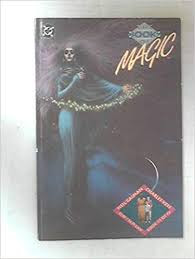
The blurb on the attached cover image makes this novel sound like the sequel that Anderson said he might write to his first heroic fantasy, The Broken Sword. I do not think that this novel can be regarded as that but I will check on that point as I reread it.
Monday, 12 August 2013
The Unicorn Trade
I have already discussed "A Feast for the Gods" by Poul and Karen as what I call "gods fiction." (Ghost stories treat ghosts as real; gods stories treat gods as real.) The Anderson's King of Ys Tetralogy is historical fiction with elements of fantasy, including some gods fiction: the Olympians and the Three of Ys withdraw before the new God that is to be in the Age of the Fish. Later, in Poul Anderson's The Merman's Children, Christian exorcism expels the last merfolk from Europe in the fourteenth century. In these cases, however, the gods, while influencing human affairs, remain off-stage so that these novels are not in your face gods fiction.
"Fairy Gold" by Poul Anderson was first published in The Unicorn Trade. Like "A Midsummer Night's Dream" in Neil Gaiman's The Sandman, this story ends when morning sunlight transforms fairy gold into dry leaves.
In a single night, when each of the human characters has a different reason for haste:
for killing a troll, Arvel Tarabine receives a large coin of fairy gold from the elf Irrendal who advises him to spend it that very night;
Zulio Pandric the banker, who recognizes fairy gold and knows its properties, gives Arvel not the 400 aureats that the coin is worth but 350 which is enough for what Arvel wants, to buy his passage on an expedition to the New Lands;
Natan Sandana the jeweler gives Zulio 400 aureats' worth of gems for the coin;
Natan buys pearls from a Norrener merchant with the coin;
the merchant gives the coin to a courtesan in return for her services in future;
the courtesan buys a large house from a scholar;
the scholar, who wants to marry, buys Lona Grancy's pottery business and cottage;
Lona had broken off her engagement to Arvel because of his unrealistic attitude but now takes the coin to him to buy their passage on the, previously unrealistic, expedition;
Arvel already has enough for their passage which is fortunate because the sun rises on the coin...
The story is set in an unspecified other world or realm with unfamiliar place names and temples instead of churches so I think that it counts as a parallel universe narrative. I also think that it connects with some other Poul Anderson short stories but I will confirm or disconfirm this by rereading further.
Natan reads the verses of Cappen Varra and a story, classed as "A-Historical," in another Anderson collection is called "The Valor of Cappen Varra" so there is a trail to follow here.
(In The Sandman, the first performance of A Midsummer Night's Dream is to Auberon's court. Asked for payment, Auberon replies, "You ask Auberon of the fay for gold? Very well, you shall have your gold." Despite what happens to the coins next morning, Shakespeare thinks that his company has been well paid by playing to such an audience.)
Wednesday, 4 September 2013
The Quest And Beyond
I have previously commented on Poul Anderson's three novels set in the fourteenth century:
The Merman's Children is historical fantasy because it assumes the truth of medieval Catholic beliefs;
The High Crusade is science fiction because it assumes faster than light interstellar travel by extra-solar aliens.
In "Quest," the short sequel to The High Crusade, it is unlikely that the Grail had been transported to another planetary system because that would make this short story a fantasy sequel to an sf novel. However, the knight leading the Quest must become a detective when he and his companions enter a chapel containing a large silver chalice protected by a Fisher King and two white-clad maidens.
There are several discrepancies but the largest single clue is the size and composition of the chalice. Surely it should be a small wooden cup? When the hoax has been exposed, the base of the chalice is found to contain a nuclear device intended to assassinate either the King Emperor or the Pope of the interstellar English Empire. That brings us back down to Earth - almost. But, before that, we have enjoyed Anderson's colorful account of a medieval Quest, including the exotic location of the supposed Grail.
In Going For Infinity (New York, 2002), the introduction to the next story after "Quest" begins: "There were other series." (p. 219) If a series means at least two, then we can classify The High Crusade and its sequel as a series. The next series to be considered is the Maurai History, here represented by "Windmill." Anderson comprehensively explains the premises of the Maurai series which begins with "The Sky People" and ends with Orion Shall Rise: rebuilding civilization with reduced resources.
Thus, looking backwards and forwards in the volume, the number of series represented here has considerably increased:
the Technic Civilization History, including van Rijn and the Ythrians;
the Psychotechnic History;
the Time Patrol;
the Kith;
the interstellar Crusade;
the Maurai;
extracts from two fantasy novels that are connected although that is not evident here;
Trygve Yamamura;
the Rustum History is represented by "The Queen of Air and Darkness," which is set in that timeline.
Flandry, of the Technic History, does not make it into this collection although he is mentioned in an introduction. Anderson remarks that the Yamamura story "...skirts fantasy." (p. 296) I think that it is fantasy.
Sunday, 2 December 2012
The Fourteenth and Twenty Fourth Centuries
first, The Merman's Children because it describes the end of Faerie which features in other Anderson novels;
secondly, Rogue Sword because its background is simply historical with no fantasy or sf;
thirdly, The High Crusade not only because its framing passages are set in the future but also because its main action features faster than light (FTL) interstellar travel and alien contact which are major themes of Anderson's futuristic sf.
In The High Crusade, the alien imperialists are like blue Merseians but not quite. Their FTL involves quasi-velocity with gravity control and no FTL equivalent of radio so it sounds like the FTL in Anderson's Technic History. There is a reference to St Dismas, van Rijn's patron saint. The collapse of the interstellar empire is followed by feudalism as happened on Earth after the Roman Empire in The King Of Ys.
The passages set in the future mention an Israeli Empire which does not exist in any of Anderson's other fictitious futures but also mention a sociotechnician which is a kind of scientific advance that he does envisage in other works.
Sunday, 3 April 2022
The Last Days Of Faerie
The Merman's Children.