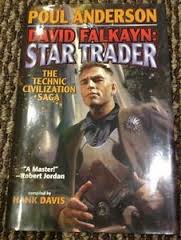
Charlie Whitcomb's attitude to the late nineteenth century is that of Jack Finney's time traveling character's:
"Whitcomb got a faraway look in his eyes. 'I'd like to have lived here,' he said.
"'Yeah? With their medicine and dentistry?'
"'And no bombs falling.' Whitcomb's answer held a defiance." ("Time Patrol" IN Time Patrol, p. 28)
Whitcomb's fiancee was killed by a V-bomb in London in 1944. Later, however, he gets his wish. Charlie and Mary Whitcomb live in London from 1850, knowing that Victoria, having already reigned from 1837, will not die until 1901. The remainder of their lives will be spent during her reign.
I was born in 1949. Elizabeth II has reigned since 1952. Thus, I have no memory of any previous monarch. I would like to be employed by the Time Patrol to live through the 1950s in the town where I grew up, making a full sensory recording of the decade. I would see my younger self at church and would listen to the sermons and even the Latin liturgy with some understanding. To re-experience the '50s without the limitations of a child's mentality, and to know what was coming and when, while also being able to vacation in other periods without missing a moment of the 1950s! I would also want to make some changes but would not be able to get away with that in a timeline guarded by the Time Patrol.
Tuesday, 22 September 2015
"This was the first moment..."
The first Time Patrol story, "Time Patrol," includes a vivid description of Victorian London as perceived by a time traveler, Manse Everard. The passage is quoted here.
Once again, there is a reference to the decline of Western civilization. These references, in the Time Patrol series, are dated 1858, 1894 and 1902. Each time, the reference is attributed to a Time Patrolman who knows what will happen in 1914.
There are a few other points of interest:
"The train was almost familiar, not very different from the carriages of British railways anno 1954, which gave Whitcomb occasion for sardonic remarks about inviolable traditions." (Time Patrol, p. 25)
British humor! This can raise a smile even though we do not read exactly what Whitcomb said. But it seems appropriate that time travelers should travel in a train that has not significantly changed its design from 1894 to 1954.
"In a couple of hours it let them off at a sleepy village station among carefully tended flower gardens..." (ibid.)
The station is among flower gardens but some British village railway stations are noted for their flower gardens. This kind of peaceful scene shows us part of what the Time Patrol protects, not only the superhuman Danellians in the far future but also the many periods when human beings are able to live comfortably. Dominic Flandry prolongs the Terran Empire for this reason - as well as for his own continued pleasure.
We recognize the private agent whom Everard and Whitcomb meet at the Wyndham estate:
"...he was tall, thin, hawk-faced, and accompanied by a burly, mustached fellow with a limp who seemed a kind of amanuensis." (ibid.)
Unmistakable. Well, I did not recognize them on a first reading but I was comparatively young then. Everard does not seem to recognize them even though it was one of that mustached fellow's memoirs that has brought him and Whitcomb to Victorian England.
Once again, there is a reference to the decline of Western civilization. These references, in the Time Patrol series, are dated 1858, 1894 and 1902. Each time, the reference is attributed to a Time Patrolman who knows what will happen in 1914.
There are a few other points of interest:
"The train was almost familiar, not very different from the carriages of British railways anno 1954, which gave Whitcomb occasion for sardonic remarks about inviolable traditions." (Time Patrol, p. 25)
British humor! This can raise a smile even though we do not read exactly what Whitcomb said. But it seems appropriate that time travelers should travel in a train that has not significantly changed its design from 1894 to 1954.
"In a couple of hours it let them off at a sleepy village station among carefully tended flower gardens..." (ibid.)
The station is among flower gardens but some British village railway stations are noted for their flower gardens. This kind of peaceful scene shows us part of what the Time Patrol protects, not only the superhuman Danellians in the far future but also the many periods when human beings are able to live comfortably. Dominic Flandry prolongs the Terran Empire for this reason - as well as for his own continued pleasure.
We recognize the private agent whom Everard and Whitcomb meet at the Wyndham estate:
"...he was tall, thin, hawk-faced, and accompanied by a burly, mustached fellow with a limp who seemed a kind of amanuensis." (ibid.)
Unmistakable. Well, I did not recognize them on a first reading but I was comparatively young then. Everard does not seem to recognize them even though it was one of that mustached fellow's memoirs that has brought him and Whitcomb to Victorian England.
Change II
See Change.
Science fiction is about change:
a short story can show a single technological advance affecting society (Heinlein: nuclear power; Asimov: robots; Niven: organ-legging);
a futuristic novel shows society changing over time (Wells' The Sleeper Wakes: global industrial capitalism; The Time Machine: devolution of social classes);
a future history series shows further changes over time (Heinlein: space travel but also social regression; Asimov and Anderson: interstellar imperial rise and fall and human-AI interactions);
Wells technologized warfare with tanks, aircraft and atomic bombs;
the first five installments of Heinlein's Future History each focus on a single technological advance, although the first is suppressed;
Anderson's History of Technic Civilization covers the rise and fall of post-Western, interstellar Technic Civilization with additional information on one earlier and two later interstellar civilizations;
Anderson's Time Patrol series dips in and out of Terrestrial history and prehistory -
the Oligocene
the transition from the Miocene to the Pliocene
the Pleistocene
Beringia
ancient Persia
Bactria
the Roman Empire
Goths and Germans
post-Roman Britain
the Middle Ages
pre-Columbian North America
the nineteenth century
Victorian London
World War II
late twentieth century New York and Amsterdam
a lunar base in 2319
galactic conflict in 19352 AD
hints about many other future periods -
- but not Technic Civilization. These are different fictional universes. Each is a complete, self-sufficient series - worthy successors respectively of Heinlein's Future History and of Wells' The Time Machine. Everyone has at least heard of The Time Machine. The phrase has entered the language. Anyone who wants to know more about the literature of change should at least check Heinlein and Anderson.
Summarizing significant science fiction always feels fresh, which is why I keep doing it.
Science fiction is about change:
a short story can show a single technological advance affecting society (Heinlein: nuclear power; Asimov: robots; Niven: organ-legging);
a futuristic novel shows society changing over time (Wells' The Sleeper Wakes: global industrial capitalism; The Time Machine: devolution of social classes);
a future history series shows further changes over time (Heinlein: space travel but also social regression; Asimov and Anderson: interstellar imperial rise and fall and human-AI interactions);
Wells technologized warfare with tanks, aircraft and atomic bombs;
the first five installments of Heinlein's Future History each focus on a single technological advance, although the first is suppressed;
Anderson's History of Technic Civilization covers the rise and fall of post-Western, interstellar Technic Civilization with additional information on one earlier and two later interstellar civilizations;
Anderson's Time Patrol series dips in and out of Terrestrial history and prehistory -
the Oligocene
the transition from the Miocene to the Pliocene
the Pleistocene
Beringia
ancient Persia
Bactria
the Roman Empire
Goths and Germans
post-Roman Britain
the Middle Ages
pre-Columbian North America
the nineteenth century
Victorian London
World War II
late twentieth century New York and Amsterdam
a lunar base in 2319
galactic conflict in 19352 AD
hints about many other future periods -
- but not Technic Civilization. These are different fictional universes. Each is a complete, self-sufficient series - worthy successors respectively of Heinlein's Future History and of Wells' The Time Machine. Everyone has at least heard of The Time Machine. The phrase has entered the language. Anyone who wants to know more about the literature of change should at least check Heinlein and Anderson.
Summarizing significant science fiction always feels fresh, which is why I keep doing it.
Change
Yet another Time Patrolman surrounds himself with artifacts from previous decades. In Shalten's Paris flat:
"The clutter around him, furniture, hangings, pictures, books, busts, bric-a-brac, declared a solidity that had endured and accumulated since the Congress of Vienna." (The Shield Of Time, p. 119)
-thus for eighty seven years. Yet again, Poul Anderson shows us the quiet before the storm.
The quiet:
"...under trees where green had begun turning yellow and brown, people thronged the sidewalks. Cafes, boutiques, boulangeries, patisseries did lively trade. The noise that rolled in was full of cheer." (ibid.)
The storm:
"Everard tried not to remember that in a dozen years this world would crash to ruin." (ibid.)
The chapter is headed 1902 A. D. Visiting Paris in that year, Everard reflects that:
"...California, 1987...was quite another world, remote as a dream - a nightmare?" (pp. 119-120)
The entire Time Patrol series is about change, even before humanity. The pouring of the Atlantic into the Mediterranean:
"...would move the planet from its Miocene to its Pliocene epoch." (Time Patrol, p. 119)
"...now had begun a hundred years of thunder. When that was done, nothing would ever be the same again." (p. 114)
"The clutter around him, furniture, hangings, pictures, books, busts, bric-a-brac, declared a solidity that had endured and accumulated since the Congress of Vienna." (The Shield Of Time, p. 119)
-thus for eighty seven years. Yet again, Poul Anderson shows us the quiet before the storm.
The quiet:
"...under trees where green had begun turning yellow and brown, people thronged the sidewalks. Cafes, boutiques, boulangeries, patisseries did lively trade. The noise that rolled in was full of cheer." (ibid.)
The storm:
"Everard tried not to remember that in a dozen years this world would crash to ruin." (ibid.)
The chapter is headed 1902 A. D. Visiting Paris in that year, Everard reflects that:
"...California, 1987...was quite another world, remote as a dream - a nightmare?" (pp. 119-120)
The entire Time Patrol series is about change, even before humanity. The pouring of the Atlantic into the Mediterranean:
"...would move the planet from its Miocene to its Pliocene epoch." (Time Patrol, p. 119)
"...now had begun a hundred years of thunder. When that was done, nothing would ever be the same again." (p. 114)
The Quiet Before The Storm
As previously noted, Poul Anderson's "The Sorrow Of Odin The Goth" closes with the pathetic fallacy of a storm and the Huns approaching simultaneously. To the dying Ermanaric, thunder sounds like Hunnish horse hooves.
However, earlier in the narrative, although later in history, Anderson presents a peaceful scene that exemplifies the metaphorical phrase, "the quiet before the storm."
"...a stroll along Unter den Linden. We came back to his house through a summer twilight. Trees breathed fragrance, horse-drawn vehicles clop-clopped past, gentlemen raised their tall hats to ladies of their acquaintance whom they met, a nightingale sang in a rose garden." (Time Patrol, p. 400)
Anderson piles it on here: summer twilight, fragrance, ladies and courteous gentlemen, a nightingale, roses, a garden. There is the quiet but where is the storm? Well, the very next sentence reads:
"Occasionally a uniformed Prussian officer strode by, but his shoulders did not obviously carry the future." (ibid.)
Should they have? Yes, this is 1858. Ganz, the owner of the twilit house says:
"'Let me enjoy my life in these decades that suit me. Too soon will they end...before Western civilization begins self-destruction in earnest...'" (ibid.)
We still live in Western civilization (I think) but did its long term death throes begin in 1914 or earlier? What does the Patrol know that we don't? One of the few good points in a later time travel novel by Robert Heinlein was the insight that historical perspectives change with time. The 1914-'18 conflict is successively called the War, the Great War, World War I, Terran Planetary War Phase One...
However, earlier in the narrative, although later in history, Anderson presents a peaceful scene that exemplifies the metaphorical phrase, "the quiet before the storm."
"...a stroll along Unter den Linden. We came back to his house through a summer twilight. Trees breathed fragrance, horse-drawn vehicles clop-clopped past, gentlemen raised their tall hats to ladies of their acquaintance whom they met, a nightingale sang in a rose garden." (Time Patrol, p. 400)
Anderson piles it on here: summer twilight, fragrance, ladies and courteous gentlemen, a nightingale, roses, a garden. There is the quiet but where is the storm? Well, the very next sentence reads:
"Occasionally a uniformed Prussian officer strode by, but his shoulders did not obviously carry the future." (ibid.)
Should they have? Yes, this is 1858. Ganz, the owner of the twilit house says:
"'Let me enjoy my life in these decades that suit me. Too soon will they end...before Western civilization begins self-destruction in earnest...'" (ibid.)
We still live in Western civilization (I think) but did its long term death throes begin in 1914 or earlier? What does the Patrol know that we don't? One of the few good points in a later time travel novel by Robert Heinlein was the insight that historical perspectives change with time. The 1914-'18 conflict is successively called the War, the Great War, World War I, Terran Planetary War Phase One...
Monday, 21 September 2015
Exempli Gratia
(This image shows the King's Palace in Berlin, 1858.)
I have learned a Latin phrase by reading Poul Anderson's Time Patrol series. Time Patrolman Herbert Ganz, based in Berlin in 1858, says:
"'...before Western civilization begins self-destruction in earnest, I must needs have aged my appearance, until I simulate my death.... What next? Who knows? I will inquire. Perhaps I should simply start over elsewhere: exempli gratia, post-Napoleonic Bonn or Heidelberg.'" (Time Patrol, p. 400)
We already know from MGM that "Ars Gratia Artis" means "Art for the sake of art." Thus, "exempli gratia" means "for the sake of an example" and is abbreviated "e.g." I have never wondered what the letters, "e.g.," stood for and would not have found out if I had not googled "exempli gratia" after rereading it in "The Sorrow of Odin The Goth."
"...post-Napoleonic..." would mean post-1815? Thus, Ganz would perhaps live through much of the nineteenth century a second time while avoiding contact with his younger self? Where/when after that? Patrollers do not die of disease or old age and Ganz avoids violent eras such as:
"...the early Germanic milieus which were his field of research." (ibid.)
"'They are unsuitable for a peaceful old scholar...,'" he says. (ibid.)
So how is he going to die?
Staying in character, he continues to use spectacles but presumably will let Patrol medics fix his eyes when he moves elsewhen and changes his identity.
I have learned a Latin phrase by reading Poul Anderson's Time Patrol series. Time Patrolman Herbert Ganz, based in Berlin in 1858, says:
"'...before Western civilization begins self-destruction in earnest, I must needs have aged my appearance, until I simulate my death.... What next? Who knows? I will inquire. Perhaps I should simply start over elsewhere: exempli gratia, post-Napoleonic Bonn or Heidelberg.'" (Time Patrol, p. 400)
We already know from MGM that "Ars Gratia Artis" means "Art for the sake of art." Thus, "exempli gratia" means "for the sake of an example" and is abbreviated "e.g." I have never wondered what the letters, "e.g.," stood for and would not have found out if I had not googled "exempli gratia" after rereading it in "The Sorrow of Odin The Goth."
"...post-Napoleonic..." would mean post-1815? Thus, Ganz would perhaps live through much of the nineteenth century a second time while avoiding contact with his younger self? Where/when after that? Patrollers do not die of disease or old age and Ganz avoids violent eras such as:
"...the early Germanic milieus which were his field of research." (ibid.)
"'They are unsuitable for a peaceful old scholar...,'" he says. (ibid.)
So how is he going to die?
Staying in character, he continues to use spectacles but presumably will let Patrol medics fix his eyes when he moves elsewhen and changes his identity.
Out Of The Past
It seems appropriate that the Time Patrol, which guards the past, houses itself in dated surroundings. Patrol members have met in anachronistic hotels and one front for the Patrol is a used bookshop. Of the London office, 1890-1910, Anderson writes:
"There was a unexpectedly heavy effect to the oak furniture, the thick carpet, the flaring gas mantles. Electric lights were available, but Dalhousie & Roberts was a solid, conservative import house." ("Time Patrol" IN Time Patrol, p. 21)
Quite right! When initially contacting the London office, Everard, opening the message shuttle, found:
"...a sheet of foolscap covered with neat typing - yes, the typewriter had been invented by then, of course." (p. 19)
Would messages from earlier milieus have been handwritten? Patrol personnel would use future communication technology only when safely concealed from contemporary observation so maybe yes, handwritten notes even from earlier in the nineteenth century when:
"Herbert Ganz...liked being Herr Professor at the Friedrich Wilhelm University in Berlin..." in 1858 (pp. 399-400).
"There was a unexpectedly heavy effect to the oak furniture, the thick carpet, the flaring gas mantles. Electric lights were available, but Dalhousie & Roberts was a solid, conservative import house." ("Time Patrol" IN Time Patrol, p. 21)
Quite right! When initially contacting the London office, Everard, opening the message shuttle, found:
"...a sheet of foolscap covered with neat typing - yes, the typewriter had been invented by then, of course." (p. 19)
Would messages from earlier milieus have been handwritten? Patrol personnel would use future communication technology only when safely concealed from contemporary observation so maybe yes, handwritten notes even from earlier in the nineteenth century when:
"Herbert Ganz...liked being Herr Professor at the Friedrich Wilhelm University in Berlin..." in 1858 (pp. 399-400).
Personal Pasts
HG Wells' The Time Machine is about travel to the remote future. Poul Anderson's The Time Patrol is about travel to the historical or, less often, the prehistorical past. However, sometimes Time Patrollers make shorter pastward journeys. Manse Everard travels from 1954 to 1947 to rendezvous with Charlie Whitcomb:
"London, 1947. He sat for a moment, reflecting that at this instant he himself, seven years younger, was attending college back in the States." ("Time Patrol" IN Time Patrol, pp. 21-22)
Later, he goes to London, 1944:
"The younger Manse Everard, lieutenant in the United States Army Engineers, was somewhere across the Channel, near the German guns. He couldn't recall exactly where, just then, and did not stop to make the effort. It didn't matter. He knew he was going to survive that danger." (p. 45)
Wanda Tamberly has a similar experience in 1965:
"On this gentle April afternoon, across the Bay in San Francisco, Wanda Tamberly was being born. Time Patrol agent or no, she must stave off a certain eeriness. Happy birthday, me." (The Shield Of Time, p. 159)
Everard also visits a historical period that is very close. In 1894:
"At this moment, his mother had not been born, his grandparents were young couples just getting settled to harness..." (Time Patrol, p. 24)
Other stories have been written that focused on the potential paradoxes of time travel within a single lifetime. See here. Also, The Time Travelers' Wife by Audrey Niffenegger and Bid Time Return by Richard Matheson.
"London, 1947. He sat for a moment, reflecting that at this instant he himself, seven years younger, was attending college back in the States." ("Time Patrol" IN Time Patrol, pp. 21-22)
Later, he goes to London, 1944:
"The younger Manse Everard, lieutenant in the United States Army Engineers, was somewhere across the Channel, near the German guns. He couldn't recall exactly where, just then, and did not stop to make the effort. It didn't matter. He knew he was going to survive that danger." (p. 45)
Wanda Tamberly has a similar experience in 1965:
"On this gentle April afternoon, across the Bay in San Francisco, Wanda Tamberly was being born. Time Patrol agent or no, she must stave off a certain eeriness. Happy birthday, me." (The Shield Of Time, p. 159)
Everard also visits a historical period that is very close. In 1894:
"At this moment, his mother had not been born, his grandparents were young couples just getting settled to harness..." (Time Patrol, p. 24)
Other stories have been written that focused on the potential paradoxes of time travel within a single lifetime. See here. Also, The Time Travelers' Wife by Audrey Niffenegger and Bid Time Return by Richard Matheson.
Causality
A particular causal sequence may be so long and complicated that it is impossible to discover its every stage and detail. This is even more so if the sequence involves human actions, therefore also conscious perceptions and motivations. An explosion causes destruction but a motive for murder may not cause murder. (A witness thought that he saw one man deliberately ram another man's car. What he in fact saw was the first man deliberately reversing his car and that car ramming the second man's car.)
Time travelers may be able to follow a causal sequence back through time. However, they must often observe and inquire discreetly. In the Time Patrol timeline, the existence of time travel must be kept secret until a far future date. In any case, if time travelers are seen to be observing or are recognized as time travelers, then this will affect the behavior of those that they are observing and will thus change the sequence of events.
The problem is magnified if the causal sequence itself involves time travel. If one of the events in an observed sequence is the arrival of a temporal vehicle, then that vehicle has departed from another time, past or future. It is no longer sufficient for the observers simply to continue moving backwards in time. If, as in the Time Patrol universe, time travel is in fact space-time travel, then the vehicle may also have departed from another place. The problem is magnified even further by variable reality. An arriving time machine may not have departed from any past or future time...
When researchers obtain their own copy of Tacitus' Histories, they find that it differs from the standard version. Everard wonders:
"Sheer happenstance; or was it? (Causality can double back on itself in strange ways.)" ("Star Of The Sea" IN Time Patrol, p. 486)
So strange that even the Patrol will not be able to unravel them?
"'Of the Histories, the oldest copy that survived contained only four books of the original twelve, and part of the fifth. That part broke off in the middle of describing what we have become troubled about. Naturally, when time travel is developed, an expedition will in due course go to his era and recover the lost sections.'" (p. 484)
Copies have been recovered and accepted as "standard." However, the newly obtained copy diverges but:
"'...the chronicle as such, the narrative line, does not split until the fifth book, very soon after the scene where the copy that survived breaks off. Is this coincidence?'
"'I dunno,' Everard replied, 'and better we pass that question by. Kind of spooky, huh?'" (p. 487)
They never do return to that exact question. Anderson's narrative generates the impression of unexplained mysteries.
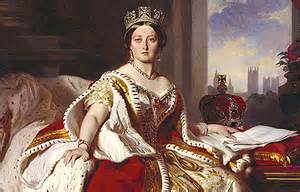
Time travelers may be able to follow a causal sequence back through time. However, they must often observe and inquire discreetly. In the Time Patrol timeline, the existence of time travel must be kept secret until a far future date. In any case, if time travelers are seen to be observing or are recognized as time travelers, then this will affect the behavior of those that they are observing and will thus change the sequence of events.
The problem is magnified if the causal sequence itself involves time travel. If one of the events in an observed sequence is the arrival of a temporal vehicle, then that vehicle has departed from another time, past or future. It is no longer sufficient for the observers simply to continue moving backwards in time. If, as in the Time Patrol universe, time travel is in fact space-time travel, then the vehicle may also have departed from another place. The problem is magnified even further by variable reality. An arriving time machine may not have departed from any past or future time...
When researchers obtain their own copy of Tacitus' Histories, they find that it differs from the standard version. Everard wonders:
"Sheer happenstance; or was it? (Causality can double back on itself in strange ways.)" ("Star Of The Sea" IN Time Patrol, p. 486)
So strange that even the Patrol will not be able to unravel them?
"'Of the Histories, the oldest copy that survived contained only four books of the original twelve, and part of the fifth. That part broke off in the middle of describing what we have become troubled about. Naturally, when time travel is developed, an expedition will in due course go to his era and recover the lost sections.'" (p. 484)
Copies have been recovered and accepted as "standard." However, the newly obtained copy diverges but:
"'...the chronicle as such, the narrative line, does not split until the fifth book, very soon after the scene where the copy that survived breaks off. Is this coincidence?'
"'I dunno,' Everard replied, 'and better we pass that question by. Kind of spooky, huh?'" (p. 487)
They never do return to that exact question. Anderson's narrative generates the impression of unexplained mysteries.
Domitian
Time travelers study history:
"'Sociologists studying Rome, early second century A.D., found on short notice that they needed to know what the upper classes thought of the Emperor Domitian, who died a couple of decades earlier. Did they really remember him as a Stalin, or concede that he'd done a few worthwhile things? The later sections of Tacitus eloquently expressed the negative view...'"
-Poul Anderson, "Star Of The Sea" IN Time Patrol, p. 486.
Tacitus wrote:
"In Republican times biographies and even autobiographies of outstanding individuals were written and admired; but they are out of fashion in an age hostile to excellence, when a brilliant career has become so hazardous and talented biographers so reluctant. Indeed, under the tyrannical rule of Domitian the authors of two such works were condemned to death and the books destroyed, as part of a calculated attack on freedom of expression in Rome. Although the new regime is far more liberal, we are slow to recover from fifteen years of such oppression - and in writing a biography of my father-in-law Agricola I feel I must ask indulgence both for my theme and for my lack of literary skill."
-D.E. Soulsby, Tacitus, Selections From Agricola (Cambridge, 1973), p. 2.
Brilliant careers becoming hazardous reminds us of what Chunderban Desai said to Dominic Flandry about the later phase of the Terran Empire. And now I really must get back to reading some Latin...
"Gnaeus Iulius Agricola, vetere et inlustri..."
"'Sociologists studying Rome, early second century A.D., found on short notice that they needed to know what the upper classes thought of the Emperor Domitian, who died a couple of decades earlier. Did they really remember him as a Stalin, or concede that he'd done a few worthwhile things? The later sections of Tacitus eloquently expressed the negative view...'"
-Poul Anderson, "Star Of The Sea" IN Time Patrol, p. 486.
Tacitus wrote:
"In Republican times biographies and even autobiographies of outstanding individuals were written and admired; but they are out of fashion in an age hostile to excellence, when a brilliant career has become so hazardous and talented biographers so reluctant. Indeed, under the tyrannical rule of Domitian the authors of two such works were condemned to death and the books destroyed, as part of a calculated attack on freedom of expression in Rome. Although the new regime is far more liberal, we are slow to recover from fifteen years of such oppression - and in writing a biography of my father-in-law Agricola I feel I must ask indulgence both for my theme and for my lack of literary skill."
-D.E. Soulsby, Tacitus, Selections From Agricola (Cambridge, 1973), p. 2.
Brilliant careers becoming hazardous reminds us of what Chunderban Desai said to Dominic Flandry about the later phase of the Terran Empire. And now I really must get back to reading some Latin...
"Gnaeus Iulius Agricola, vetere et inlustri..."
Subscribe to:
Posts (Atom)