Showing posts sorted by date for query For Love And Glory. Sort by relevance Show all posts

Monday, 27 April 2026

Antiagathics And FTL

The premises of James Blish's Cities In Flight Tetralogy are that both an indefinitely prolonged lifespan and faster than light (FTL) space travel are necessary for interstellar travel. Both have been achieved:

by the end of Cities In Flight, Volume I;

by the end of Robert Heinlein's Future History, Volume IV;

before the beginning of Poul Anderson's World Without Stars;

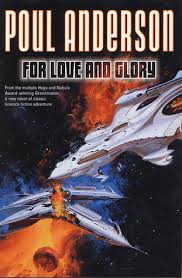
before the beginning of Anderson's For Love And Glory.

Many sf characters have FTL without immortality and the characters in Anderson's The Boat Of A Million Years have immortality with STL.

There needs to be a very long novel or series about what immortality would be like over a very long period of time. As we count our age not in months but in years, immortals would come to count theirs in decades, then in centuries, then in millennia... Knowing that they had endless time in which to perform any given task, they might never get around to doing it. 

Procastination is the thief of endless time? How else might their psychology change?

Addendum: John Amalfi briefly considers the psychological effects of longevity somewhere near the end of Cities In Flight but I can't find the passage right now.

Friday, 24 April 2026

Resemblances And Outmoded Ideas

A Superman comic reminded me of a Robert Heinlein novel and Poul Anderson's The Night Face reminded me of another superhero, Green Lantern. See:

Words And Texts

Poul Anderson's World Without Stars reminded me of another Superman comic. See:

Hugh Valland And Superman

Yet another Superman comic, this one written by Alan Moore, reminded me of James Blish's Mission To The Heart Stars. In this case, the connection was that Superman's antagonist, Mongul, physically resembled Blish's Hegemon of Malis. 

Blish's Heart Stars federation, self-designated "the Hegemony of Malis," has become, like Asimov's planet Trantor, an outmoded sf concept. Blish's idea was that, since stars are much closer at the galactic core, an interstellar federation might develop more quickly there. Now, instead, it is generally accepted that there is a massive black hole at the centre as in Larry Niven's A World Out Of Time and Anderson's For Love And Glory.

(Asimov had the Galactic Imperial capitol at the galactic centre but a later contributor to Asimov's Foundation series moved Trantor further out so that the black hole could occupy the centre.)

See also Parallels.

Saturday, 3 January 2026

What We Want And Need

Alan Moore said somewhere that a good writer gives his readers not what they think that they want but what he knows that they need. I agree, although the test of whether the writer is right about what his readers need is whether they buy what he writes.

Arthur Conan Doyle wanted to write fewer Sherlock Holmes stories because he thought that his historical fiction and other kinds of writing were of greater value. Poul Anderson stopped writing his Technic History because he thought that it had made its point and because there were other fictional narratives that he wanted to write. I think that Genesis is significant but would have preferred less of the Harvest Of Stars Tetralogy and of For Love And Glory and more of the Technic History. 

The Doyle and Anderson cases are not comparable. Doyle was right that detective fiction is inherently limited whereas the Technic History is inherently unlimited and could have been continued indefinitely while increasing in complexity without decreasing in creativity. We did not need any more "Captain Flandry" stories but Anderson would not have given us that. A shorter Diana Crowfeather and Targovi series? An Aycharaych novel? More about the Long Night, the Allied Planets and the Commonalty? There are no limits to the potential of this series.

Friday, 14 February 2025

Nanotech


"The nanoprocessors would take any material and transform it, atom by atom, into anything else for which they had a program."
-The Boat Of A Million Years, XIX, 17, p.509.

""Once an aspect of nature is known, quantum computers and nanotechnic construction make for rapid progress."
-Starfarers, Prologue, p. 12.

- my only point here being that, late in their careers, sf writers of Poul Anderson's generation had to acknowledge nanotechnology. It is probably mentioned in Harvest Of Stars although no references hit me in the face when I looked for them just now. Several of Anderson's later novels share some common features that come cross as more plausible extrapolations than the earlier hyperspace and many aliens stuff. For Love And Glory is an exception. He could also return to earlier series with their already established premises, i.e., there were late addition to the Time Patrol and the Technic History. Old and new combined. 

See blog search result for nanotechnology. (Scroll down.) (There is nanotech in Harvest Of Stars.)

Friday, 24 January 2025

STL Or FTL

Poul Anderson's Major Fictional Futures With Slower Than Light (STL) Interstellar Travel
Tales Of The Flying Mountains
The Rustum History
Kith: short stories
Kith: Starfarers
The Harvest Of Stars Tetralogy
Genesis
Tao Zero
The Byworlder
The Boat Of A Million Years, XIX, Thule

FTL
The Psychotechnic History
The Technic History
The High Crusade
World Without Stars
After Doomsday
For Love And Glory
The Hoka series (with Gordon Dickson)

Extra-Galactic
Tao Zero (STL)
World Without Stars (FTL)

Future Histories
We know which ones they are by now!

Thursday, 23 January 2025

A Few Details

I have just had that familiar and annoying experience of not finding a book, in this case Genesis by Poul Anderson, where it should have been on a bookshelf. However, I have also just ordered a cheap replacement copy online. It is expected by 12 Feb. I want to quote and compare certain passages in Genesis (I think) and in the same author's The Boat Of A Million Years and There Will Be Time. I might start on this before Genesis arrives although I will then, of course, have to locate the passage that I am thinking of in that book. 

While looking for Genesis, I found Isaac's Universe, Volume Two, which contains Anderson's "Woodcraft." Is this one of the two Andersonian Isaac's Universe stories that Anderson adapted and incorporated into his For Love And Glory? I will read or reread this story at least until I have confirmed that it is familiar.

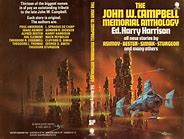
When farmer John gave me a lift home after the sf group, I found on his dashboard something that I had never previously seen or held, a paperback copy of The John W. Campbell Memorial Anthology. See the attached image. This anthology presented Anderson's "Lodestar." As I explained to John, this is a pivotal story of Anderson's main future history series and I have read it in that context, not in its original anthologization. 

Sunday, 19 January 2025

Reading Preferences

In sf, we are glad that Poul Anderson did not write only the Technic History because then we would not have had, e.g., Tau Zero, World Without Stars or Genesis. In any case, Anderson had to begin his future historical writing with (something like) the Psychotechnic History before two otherwise independent series coalesced into the Technic History. However, I would still have preferred less of some other things - maybe a shorter Harvest Of Stars series and no For Love And Glory? - and more Technic History: maybe the Aycharaych novel suggested to Anderson by the British sf bookseller known online as ppint?

In Lancaster, we celebrate Chinese New Year with a dragon in the street and a concert at the Grand Theatre this evening so we will shortly make our way there while I remember Adzel and hope that our Earth will survive into a more civilized future.

Wednesday, 31 July 2024

Hyperdrive Oscillations

Mirkheim, VII.

I am only just taking on board the limitations on communication by hyperdrive oscillations. These oscillations are instantaneously detectable at about a light year but, for most of that distance, they can be modulated only into an on-off code. Voice transmission is possible only within a few thousand kilometres and pictures require even closer proximity. Ship to ship, Grand Duchess Sandra and a Baburite representative communicate by sound alone. 

This seems plausible. Technology has its limits and these sound like the sorts of limits that faster than light communication might have if it were possible in the first place. Less plausible, I think, is the instantaneous interstellar communication in Poul Anderson's later For Love And Glory.

Ursula Le Guin's future history has an instantaneous communicator called the ansible but the master of faster than light (FTL) communication is James Blish:

the ultraphone, FTL but not instantaneous;

the CircumContinuum (CirCon) radio in A Case Of Conscience, instantaneous;

the Dirac transmitter in Cities In Flight, instantaneous;

the Dirac transmitter in "Beep"/The Quincunx Of Time, receiving messages not only from the present but also from the past and future.

Thursday, 6 October 2022

Memories And Machines

In The Boat Of A Million Years, World Without Stars and For Love And Glory, Poul Anderson addresses the question of the problem of accumulating memories in an indefinitely prolonged lifespan. This is how another future history addresses the issue:

"...before death had been indefinitely postponed, it had been thought that memory would turn longevity into a Greek gift, because not even the human brain could remember a practical infinity of accumulated facts. Nowadays, however, nobody bothered to remember many facts. That was what the City Fathers and like machines were for: they stored data. Living men memorized nothing but processes, throwing out obsolete ones for new ones as invention made it necessary. When they needed facts, they asked the machines.
"In some cases, even processes were wiped from human memory to make more room if there were simple, indestructible machines to replace them - the slide rule, for instance. Amalfi wondered suddenly if there was a single man in the city who could multiply, divide, take square roots, or figure pH in his head or on paper. The thought was so novel as to be alarming - as novel as if an ancient astrophysicist had seriously wondered how many of his colleagues could run an abacus.
"No, memory was no problem. But it was hard to be patient after a thousand years."
-James Blish, Earthman, Come Home IN Blish, Cities In Flight (London, 1981), CHAPTER FOUR, p. 319.

Make of that what you will. (What is a Greek gift?)

Wednesday, 28 September 2022

Fictional Theology

Why discuss theology if some of us are atheists?

First, some of us are not.

Secondly, some fictional characters created by Poul Anderson, James Blish, Philip Jose Farmer, SM Stirling, Walter M. Miller, Ray Bradbury and CS Lewis accept Christian theology.

Thirdly, Lewis did.

Fourthly, sometimes we can translate from theistic into nontheistic terminology, e.g., "God wills x" equals "X is good"; "What does God want us to do?" equals "What should we do?"

In Poul Anderson's The Game Of Empire, Axor seeks for evidence of an extraterrestrial Incarnation and finds parallels between religions on different planets. How will he distinguish between evidence for an Incarnation and evidence for belief in an Incarnation? There are bound to be parallels if there are so many oxygen-breathing intelligences on terrestroid planets. In one region of Ikranaka, where there are seasonal changes, it is believed that Zuriat the Bright is reborn annually. On Earth, belief in cyclical resurrection preceded belief in one unique historical Resurrection.

CS Lewis was more imaginative than Axor:

"...nothing was ever repeated. Not a second crucifixion: perhaps - who knows - not even a second Incarnation...some act of even more appalling love, some glory of yet deeper humility."
-CS Lewis, Perelandra IN Lewis, The Cosmic Trilogy (London, 1990), pp. 145-348 AT II, p. 278.

By the way, crucifixion/impalement, turns me off big time.

Thursday, 11 November 2021

Exploding Heads And Immortality

"Thunder smote. His skull exploded. Blood and brains fountained."
-The Fleet Of Stars, 13, p. 160.
 
"...Mister's head was exposed for a split second, and the sniper blew it off."
-John Grisham, The Street Lawyer (London, 2010), TWO, p. 20.
 
Late night reading: two sniper shots to the head.
 
"The human brain has a finite data-storage capacity; a thousand years will fill it."
-The Fleet Of Stars, 6, p. 82.
 
Therefore, an immortal would have to edit his memories and thus would attenuate his personality. This problem is addressed in different ways in Anderson's World Without Stars, The Boat Of A Million Years and For Love And Glory. Also, his Time Patrolmen live indefinitely prolonged lifespans but can electrocram, then delete, linguistic knowledge so can probably edit experiential memories.
 
Apart from cerebral storage of unconscious memories, think about our experience of conscious memories. (This argument comes from a book that I cannot find on the shelves right now.) The conscious mind forgets most of its experiences but retains enough key memories to maintain a sense of personal identity and continuity. However, if we were to live indefinitely - a million years, a billion years etc - then we would have more key memories to recall and would be able to recall each particular memory, among all the others, less and less frequently. Eventually, either earlier experiences would be completely forgotten or they would not be recalled often enough to maintain any personal continuity. A billion-year old being would surely have forgotten his early life and could hardly be described as the same person any more.
 
Maybe the answer is in World Without Stars where they delete most memories, leaving only enough for an individual to remember who he started out as and what he has done recently. His experience remains that of a much younger person.

Saturday, 25 July 2020

Pele And The Planet

"Pele."

A gas giant planet, very close to its sun and about to fall into it, is observed by human beings and kzinti. Poul Anderson imagines every kind of cosmic event. In For Love And Glory, hostile species observe a collision between two black holes. In "Pele," the planet approaches its Roche limit.

It is uncoincidental that Ryan compares Tyra to the goddess Pele in "Inconstant Star" and that a star is named "Pele" in "Pele" because it is Tyra who names it.

Probably:

the planet will fill its Roche lobe;
it will become teardrop shaped;
planetary turbulence will eject matter;
the matter will spiral into Pele;
the spiral will become an accretion disk;
it will last for decades or centuries.

Wednesday, 22 July 2020

Hyperdrive And Hyperwave

"Inconstant Star," Chapter VI.

We have to learn the rules of interstellar travel and communication in each new sf series:

in Poul Anderson's Technic History, hyperpulses can be modulated to carry information only across one light year;

in Anderson's For Love Of Glory, there is an instantaneous interstellar hyperbeam;

in Anderson's "Iron," set during the Man-Kzin Wars period of Larry Niven's Known Space future history, why do spaceships with hyperdrives communicate by radio even though there is interstellar communication by hyperwave?

"'If only we could stay in touch!'
"Ryan shrugged. 'Someday they'll miniaturize hyperwave equipment to the point where it'll fit in a spaceship.'
"'Why haven't they already?' she protested. 'Or why didn't it come with the hyperdrive?'
"'We can't expect to understand or assimilate a non-human technology overnight,' Yoshii told her in his soft fashion. 'As was, it took skull sweat to adapt what the Outsiders sold your world to our uses...'" (p. 211)

Kzinti acquire hyperdrive from human beings who bought it from Outsiders who do not travel through hyperspace but could have acquired the drive to trade with anywhere in the galaxy.

In Anderson's Aftter Doomsday, the superlight drive spreads between civilizations like dandelion seeds.

Saturday, 6 June 2020

WALB

In recent posts:

Three Moons
Wells' Selenites;
Lewis' Sulva;
Anderson's evil Beings from Earth.

Three Earths 
Anderson's goetics;
Blish's Armageddon;
our current crises.

The third Earth is the real one where the others are imagined. However, Steve Matuchek on the goetic Earth imagines two Earths similar to ours:

one without goetics;

another with what we recognize as Nazism and Stalinism.

Blish acknowledges Lewis who acknowledges his debt to Wells.

Demons speak in works by Lewis, Blish and Anderson although, of these three authors, only Lewis believed in their literal existence and did not claim to know any details.

Wells' The Time Machine was published in 1895;
Anderson's Genesis in 2000;
Anderson's Mother Of Kings in 2001;
Anderson's For Love And Glory in 2003.

With Lewis and Blish between, these four authors span the twentieth century.

The Time Machine and Genesis present alternative fictional accounts of the ultimate fate of mankind on Earth.

Tuesday, 13 August 2019

Isaac's Universe And FLAG

See:

Inga And Ilis
Middle Earth And The Technic History

Poul Anderson's For Love And Glory is divided into Chapters I-LIV (1-54).

His "The Burning Sky" became X-XXIX (10-29). Names were changed.

His "Woodcraft" became XXXIV-XL (34-40), although more was changed than names.

In FLAG, XXXIV, Lissa Windolm has already met Torben Hebo in II whereas, in "Woodcraft," Laurice Windfell has not previously met Kristan Arinberg. The texts diverge in more ways than I can analyze at present.

More later, although not on this, after breakfast and an outing with Wiccan High Priest Nygel.

Monday, 12 August 2019

Middle Earth And The Technic History

I have acquired a copy of Isaac's Universe, Volume Two: Phases In Chaos, edited by Martin H. Greenberg, because it contains "Woodcraft" by Poul Anderson which Anderson adapted as one section of his novel, For Love And Glory.

Asimov famously created a humans-only galaxy in his Foundation series, then created the multi-species "Isaac's Universe" for other authors to set original stories in. In his Introduction to Volume Two, Asimov cites Tolkien as an unconscious inspiration because the latter's Middle Earth is a multi-species environment with:

human beings
elves
dwarfs
ents
wizards
hobbits
orcs/goblins
trolls
Tom Bombadil
Shelob
superwolves
supereagles
a superbear
Gollum

However, since Tolkien's Middle Earth history is a fantasy set on a single planet, a much more relevant possible source is Poul Anderson's History of Technic Civilization which is multi-planet sf with:

human beings
winged Ythrians
green Merseians
large Wodenites
small Cynthians
goblin-like Gorzuni
no-longer-human Kirkasanters -

- and many more.

Anderson, of course, also adapted Norse mythology, including elves, independently of Tolkien.

Saturday, 27 July 2019

Inga And Ilis

For Inga, see City Life.

Poul Anderson's Technic History includes some texts that have been revised to fit them into this future history series. Similarly, Anderson's For Love And Glory, which was potentially a new series, contains revised versions of Anderson's two contributions to the multi-authored Isaac's Universe (or Isaac Asimov's Universe) series.

At least in the opening passages, only the names have been changed:

Inga becomes Ilis;
Harul Vargen becomes Gerward Valen;
Laurice Windfell becomes Lissa Windholm;
the Brettan people become the Brusan people;
the planet, Ather, is renamed "Asborg";
the Ronaic Alps become the Hallan Alps;
"Erthuma settlement" becomes "human settlement";
a spaceship name is changed from "Darya" to "Dagmar";
etc.

Having recently reread FLAG closely, I will decision-make as to whether to continue to check the two texts for any further comparisons.

Monday, 22 July 2019

Interstellar Communication

The Inter-Being League uses subspace radio.

There are subtronics in "Sargasso of Lost Starships" but a transonic communicator in "The Star Plunderer" and the rest of the Technic History has modulated hyperpulses whereas there is a hyperbeam in For Love And Glory.

There is an "ansible" in Ursa Le Guin's Hainish future history.

Compare James Blish's Dirac transmitter and other interstellar communicators. Also, Communication. For more on his CirCon (circum-continuum) radio, see ASK Haertel.

Saturday, 13 July 2019

Stellar Fiction

Having enjoyed rereading one novel about interstellar travel, Poul Anderson's For Love And Glory, I want to read (or reread) another but all of Anderson's solo interstellar sf has been reread too recently.

However, I have read Poul Anderson's and Gordon R. Dickson's Star Prince Charlie only once. The opening paragraph of its Prologue reads:

"Seen from Earth, the sun of the planet which men have named New Lemuria  lies in the southern constellation of Toucan. Of course, it is not seen from Earth except through powerful telescopes, for it lies more than 200 light-years away. A Sol-type star is nowhere near bright enough to reach the naked eye across such a distance."
-Poul Anderson and Gordon R. Dickson, Star Prince Charlie (New York, 1976), Prologue, p. 5.

A fictional narrative is a combination of truths and untruths although the latter are not lies and usually should be both plausible and consistent with what is known. There can be exceptions. Plausibility is not a priority in superhero fiction. Alternative history fiction by definition contradicts known history. In both cases, it is entertaining to read clever rationalizations of any divergences from reality.

The opening paragraph of Star Prince Charlie is skillfully written fiction. There is a Toucan constellation but the telescopes powerful enough to show the sun of New Lemuria have not been built yet. The star is there (of course) but we cannot see it (yet).

Archaisms IV

For Love And Glory, XXXVIII.

I have located the single remaining archaism that I knew of:

"'You not being a girl straight out of convent school,' whatever that meant..." (p. 212)

Two of the archaisms quoted in previous posts originated in baseball.

Hebo also refers to a "'...circus.'" (L, p. 271) and I wondered whether that might also be archaic.