Showing posts sorted by relevance for query Birmingham. Sort by date Show all posts

Thursday, 27 April 2017

Birmingham And Archopolis

Next month, I will visit Birmingham again. This is relevant for two reasons.

(i) Tolkien had a place there, which I might see this time. Tolkien is relevant because he and Poul Anderson simultaneously and independently adapted Norse myths as modern fantasies.

(ii) Birmingham's multiculturalism is like an anticipation of Anderson's multi-species Terran Empire. We are entitled to wonder what contribution the former Birmingham might make to the urbanized Earth when the part of it that is called Archopolis is the capital of the Empire.

Often, the human beings that we encounter in the Imperial period come not from Earth but from colony planets:

two men of Indian descent from Ramanujan where there is a Mount Gandhi;
a Jewish man from Dayan;
a Muslim from Huy Braseal;
a Sikh maybe from Terra but from which part? The Punjab? Birmingham? Somewhere else?

We always want to know more.

Friday, 27 November 2015

Exotica And Mirrors

We enjoy a work of fiction like a future history series for two contradictory reasons:

(i) exotic settings sharply contrasting with familiar environments;

(ii) reflections of reality in the mirror of fiction, e.g., recognizable kinds of social problems and political conflicts within the exotic settings of Poul Anderson's Solar Commonwealth or Terran Empire.

We can get a taste of (i) by visiting another country or city. Birmingham is not a multi-species community like Anderson's Imhotep (!) but is multi-racial, soon to be majority non-white. In its pedestrianized city center yesterday:

a lone black man preached Christianity;

opposite him, a man with a megaphone preached Islam while his companion distributed religious leaflets;

further down the same street, another Muslim group did a PR job, answering questions and explaining that "jihad" means just wars waged by legitimate governments respecting non-combatants, not mass murder committed by unauthorized fanatics;

stalls sold German food.

My friend has also seen Krishna devotees on the street. A bus bound for "Druids Heath" brought us to Birmingham Buddhist Centre, its building a former synagogue, just as a Sikh courier, identifiable by his turban and kara, delivered a parcel.

We ate in a palatial Indian restaurant with some white waiters and mostly Asian clientele. Apparently, some Indian restaurants in Nottingham promote themselves as authentic Birmingham Indian restaurants!

I have referred to two cuisines and to seven religious traditions; only one, perhaps, originated on this island. We rival the diversity of Anderson's Terran Empire and his Domain of Ythri where, on a vibrant street:

"...a man gaunt and hairy and ragged...stood on a corner and shouted of some obscure salvation..."
-Poul Anderson, Rise Of The Terran Empire (New York, 2011), pp. 500-501.

Why obscure? Is it a religion from Terra that we would recognize but that has become obscure in subsequent centuries? Or is it new and alien? Anderson rightly leaves that question unanswered.

We must hope that our future will be as diverse as that of the Terran Empire and not like that of SM Stirling's Draka. I have just received The Stone Dogs, Draka Vol III...

Traveling by train, I continued to read about Alan Moore and disagreed with him about one of his works.

Thursday, 25 May 2017

Contact Re-Established (Out Of The Silent City)

I have been in Birmingham for three nights without my laptop. When I try to sign in from a strange PC, Google sends a verification code to my old mobile number so we do not communicate. Any attempt to give them my new number fails. I have much to catch up on so please bear with me.

Poul Anderson and JRR Tolkien based fantasies on Norse mythology but Anderson also wrote in several other genres, mainly hard sf. Birmingham parks have been renamed the Shire Country Park after the Shire in Tolkien's Middle Earth. (Also, a town in Sicily has renamed itself after a fictional one. See here.)

Dwellers In Space
(i) Olaf Stapledon's pre-galactic nebulae.
(ii) Fred Hoyle's intelligent gas clouds.
(iii) CS Lewis' eldila.
(iv) James Blish's Angels.
(v) Poul Anderson's Aurigeans.
(vi) Larry Niven's Outsiders.

(i) and (ii) are gas.
(iii) are "hypersomatic."
(iv) and (v) are energy.
(vi) are solid.

Often, Anderson alone covers every option but sometimes, as here, he does it in cahoots with his illustrious colleagues. What authors' names to conjure with!

In Anderson's First Dominic Flandry Novel And Blish's Second Jack Loftus Novel
(i) Flandry visits Merseia while the Rhoidhunate plots to disarm Terra.
Jack visits Malis just as the Hegemony decides to annex Earth.

(ii) Flandry and his superior meet the Protector of the Roidhun's Council.
Jack and his superior meet the Hegemon of Malis.

(iii) Abrams and Flandry spy on Merseia.
An Angel concealed in the Earth ship spies on the Hegemony.

(iv) Merseians are less rule-bound than human beings.
Malans, even the Hegemon, are entirely ruled by their machine-interpreted laws.

(v) Flandry and one companion flee through hyperspace.
Jack and his two companions flee on the Haertel overdrive.

(vi) Land- and sea-dwelling Starkadians are natural enemies like men and wolves.
Land- and sea-dwelling Terrestrials (men and dolphins) decide to live in amity with each other and thus become able to live in amity with extraterrestrials.

(vii) Blish, like Anderson in other works, discusses the issue of freedom in future high-energy civilizations.

Dig it. Anderson fans, read Blish!

Jack Loftus heard not, as I had thought, the music of the spheres but a "dismal universal hiss," not quite the same thing! This will lead to reflections on:

chaos in Milton, Heinlein, Anderson and Alan Moore;
Milton as quoted by Lewis, Pullman and Blish.

Laters.

Saturday, 30 April 2016

Places Of Worship In Birmingham And Ys

In Birmingham, we visited the Central Mosque, where we watched an imam leading prayers, and St Martin's Church (see image and here), where we ate in the cafe and I meditated in a side chapel. On the street, I heard a Christian preacher and received a free Koran from a Muslim propagandist - but, when I sat on a bench to read it, a passerby advised me to read the Bible! Like Poul and Karen Anderson's King of Ys Tetralogy, these are books in which God(s) are active. In fact, here is a centuries-spanning scriptural sequence:

a Torah scroll in a synagogue;
a Bible on an eagle lectern in a church;
a Koran in a mosque;
a Granth at the highest point of a Gurdwara.

And what a seemingly endless historical succession: the Granth includes hymns written by Muslims who accepted the Koran which repeats stories from the Bible which incorporates the Torah which is the only scripture accepted by Samaritans. Other hymns in the Granth were written by Hindus who accepted the Veda and its many sequels. These are the works of millennia, not of any single author or even of a husband-wife team... Nevertheless, the Andersons present an impressive four-volume account of changes among Europeans and their Gods.

If I were able to visit Ys, both backwards and sideways in time, I would:

visit the various Temples and Shrines;
ask whether it was permissible to meditate in one of them;
in any case, meditate in lodgings in Old Town or high in one of the towers surrounded by seagulls.

Thursday, 16 January 2025

The New Faith And Others

Referring to the immediately preceding post, Christopher Holm became Arinnian by joining Stormgate Choth and later married Tabitha Falkayn, a direct descendant of David Falkayn, who is also Hrill of Highsky Choth, most of whose members, according to Hrill, are of the Old Faith. If we are reading Poul Anderson's Technic History in chronological order of fictional events, then we remember that a conflict between Christian and New Faith attitudes to death and dying was the crux of Peter Berg's narrative in the earlier story, "The Problem of Pain." My point, as ever, is how rich, detailed and interconnected the Technic History is. Any summary has to be revised more than once to include every internal connection.

Here we can contemplate three galactic monotheisms:

Ythrians of the New Faith see the shadow of God the Hunter across the future;

Peter Berg's church had concluded that Jesus came only to humanity whereas the Jerusalem Catholic Church ordained the Wodenite Axor who seeks for evidence of an extraterrestrial Incarnation;

Merseians of the Roidhunate believed that "the God" had intended galactic hegemony for their race.

Three paradoxically incompatible monotheisms.

If Merseians are as diverse as human beings, then their failure to conquer the galaxy will have multiple consequences. Some will become secularists whereas others might convert to the New Faith or to a Terrestrial religion. Among Wodenites, although Axor became a Christian, Adzel had embraced Mahayana Buddhism.

The galaxy sounds like London or Birmingham. (In Birmingham, there were Christian, Muslim and Krishnaist propagandists on the streets. On visiting the Buddhist Centre, I recognized a Sikh messenger coming out as I went in and was told that people brought up in Jewish and other traditions came to inquire about alternatives.)

Saturday, 20 May 2017

Dynamic Diversity

(Lancaster: Dalton Square, Queen Victoria, Town Hall.)

Today there will be a celebration of diversity in Lancaster. (Later: see here.) The City Council meets in the Town Hall. We will assemble in Dalton Square. Sometimes also there are gatherings in Market Square where the former Town Hall is now the City Museum.

From Monday to Thursday, I will be in Birmingham, a city that usually inspires posts comparing its diversity to that of Poul Anderson's multi-species Terran Empire. This time, I might learn more about that city's Tolkien connection. But I might not have much access to a computer while there.

The current agenda is to continue reading Anderson's Murder In Black Letter, then to read the next two volumes of SM Stirling's Emberverse series. As John Carter says, "We still live!"

Monday, 11 February 2019

Torture And Violence

Poul Anderson, Shield, XVI.

Anderson addresses endless issues.

The gloves are off. The Equals use torture with a mixture of justification and enjoyment. I have never met a revolutionary that would use torture but then I have never lived in a country where it was likely to happen either. I would not remain in an organization that tortured even our worst enemy. Such evil means cannot lead to any good end. Unfortunately, some current governments are implicated.

Here is a moral question. If we captured a secret police torturer, would it be legitimate to put him in a cell and give him time to think that he was going to be dealt with as he had dealt with others..? (Meanwhile, he might have to be locked up for his own protection. No government can control what every member of the public might do.)

In Britain, a very small revolutionary organization defended the Birmingham pub bombings. (Many of us supported the six men wrongly convicted of the bombings - a very different proposition.)

One wing of the anti-racist movement favors violence against organized racists. Most of us prefer to counter-mobilize and outnumber them on the streets without violence. That has been enough to demoralize and demobilize them.

Saturday, 25 January 2020

This Afternoon And Evening

Hello. I am having lunch before heading over to Morecambe to try to visit Andrea. A more complicated post about Didonians is gestating but will have to wait until this evening. The Indian curry mentioned recently here is postponed because a friend is unwell. Rereading Poul Anderson blends with the rest of life. Sheila will visit her family in Northern Ireland and I might revisit the friend in Birmingham. Because Sheila likes Malta, we might revisit there although I do not want to make a habit of flying in the current climate.

Laters...

(Andrea's brother's Old Pier Bookshop, front and interior. Andrea inhabits the two floors above the shop.)

Thursday, 28 April 2016

Lir Way

(Today, we visited Birmingham Central Mosque.)

According to pp. 137, 144 of Roma Mater (London, 1989) by Poul and Karen Anderson, Lir Way, the main east-west avenue of Ys, stretches from an arch by Skipper's Market to High Gate which opens onto Aquilonian Way. However, the map of Ys on p. 11 shows Taranis Way in this position and Lir Way crossing it at right angles in the Forum at the city centre, thus stretching from north to south.

According to the text, Gratillonius and Quinipilis, one of his Nine Queens, leave Quinipilis's house, which opens directly onto a street, and walk along the street until it joins Lir Way. Near the end of the street, they can see Elven Gardens and the adjoining temple of Belisama. Lir Way (or maybe it is Taranis Way) brings them to High Gate, Warriors' House and Dragon House. There they climb the stairs to the top of the city wall and to the tower called the Gaul. Walking south, they pass the Roman tower. They see Point Vanis to the north, Cape Rach to the south, many rooftop catch basins, a storage tower for water from the canal and buildings of as many as fifteen stories.

Taranis Way is said to run from Aurochs Gate to Northbridge Gate whereas the map shows Lir Way doing this. Gratillonius and Quinipilis pass Goose Fair by Aurochs Gate. The description gives us two other senses:

"Savouriness drifted in smoke from foodstuffs, merchants cried their wares from booths." (p. 141)

From the Raven Tower, they see bastions and the sea portal. They descend and pass the shipyard. p. 149 says that they turn left towards the temple of Lir although the map suggests that they would turn right at this point. They climb back up by the Gull Tower and continue to walk around the city wall, passing Northbridge Gate, Star House and the Water Tower that is used as an observatory. They reenter the city at the Gaul.

"In Ys the idea was current that consciousness resided in the head." (p. 151)

Where else would consciousness reside except behind the eyes, nose and palate and between the ears. Animal life might be located in the stomach but surely not awareness and thought? - although I have read that the Biblical phrase "hardness of heart" means lack of understanding, not lack of compassion.

Friday, 1 December 2017

A Fantastic World

Do the newspapers show us a world as fantastic as the future societies of Poul Anderson's sf?

In Britain, we have:

not an Empire any more but certainly the relics of one, including current plans for a Royal Wedding;

a Christian Church that has been in place since the sixth century;

not a multi-species civilization but certainly a multicultural society with a majority of non-whites in the City of Birmingham which has two Cathedrals, a Central Mosque and a Buddhist Centre;

international conflicts, including major threats to peace and security;

the world-wide web, including not only financial institutions and news media but also this blog which mainly concerns itself with exotica like a fictional Jupiter and the Terran Empire.

Like the Polesotechnic League, we do not know where we are going but we are on our way.

Tuesday, 17 May 2016

"Blessed are the poor in spirit..."

Princess Dahut finds Fennalis, one of the Nine Witch-Queens of Ys, reading, translated into Ysan:

"Blessed are the poor in spirit..."
-Poul and Karen Anderson, Dahut, Chapter IV, section 1, p. 85.

Dahut recoils in horror from a Christian text. She protests that Christians deny the Gods. Fennalis replies that:

she wants to learn a little about what so many believe;
they must have some truth or insight;
our Gods deny or defy theirs -

- and she asks who is more righteous.

Fennalis is a precursor of the new Age, ours. We can buy the translated scriptures of all religions in high street bookshops. No one should now be uninformed or merely accept an inherited belief without inquiring further. Birmingham Buddhist Centre receives inquirers who have been brought up in diverse traditions.

For a better response than Dahut's, see here.

Sunday, 21 May 2017

Endless Comparisons

Because I find it more convenient to read a book in the hand than an ebook on screen and because I prefer sf to detective fiction, I have easily been diverted from reading Poul Anderson's Murder In Black Letter to rereading James Blish's The Star Dwellers while comparing:

Blish's Haertel overdrive with Anderson's Mach drive;
Jack Loftus with Dominic Flandry;
Jack's mentor, Howard Langer, with Flandry's mentor, Max Abrams;
the Hegemony of Malis with the Roidhunate of Merseia;
Anderson's, Niven's and Blish's feline aliens (Blish's remain quadrupedal).

Other comparisons and contrasts are possible. Flandry's contemporary, John Ridenour, reflects that the universe produces sophonts as casually as snowflakes. Langer goes further, claiming that intelligences arises wherever it can. In Langer's period, the evidence has proved him right but he claims that this was expected. Is it?

For heuristic purposes, Blish's foreign service cadets are under an oath of celibacy whereas Flandry is anything but. In fact, Abrams plans to make Machiavellian use of his assistant's sexual activity: have the Ensign sent Home in disgrace - carrying military intelligence with him under the noses of the appeasers.

Blish's industrialist, McCrary, has got one of the energy beings called Angels to inhabit and control a fusion plant for him and wants to employ Angels to do this all over Earth whereas the Secretary for Space more prudently wants a treaty with the Angelic race or nation first. Would Anderson's capitalists be more cautious? CS Lewis (the character) knows that his friend, Elwin Ransom, receives visits and communications from extra-planetary angels and fears that Ransom is a beachhead for invasion. In the horror sf of Quatermass, any alien visitation could only be a threat.

Tomorrow, I will travel to Birmingham by train, carrying a book but not my laptop.

Monday, 9 January 2023

A Duplicated Biblical Reference

I said here that I had missed a Biblical reference but then checked and found that I had spotted it here. However, the two posts are so different that both can stand. I used to notice that James Blish quoted the Bible quite a lot but Anderson's output was much bigger than Blish's so his Biblical allusions are more numerous. For a variation, Blish begins The Triumph of Time, about the end of the universe, with Koranic verses about the Day of Judgement. This is not always an abstract issue. In Birmingham in Britain right now, we encounter street propagandists for both the Bible and the Koran - and prophecies of an imminent catastrophe resonate. Both scriptures and science fiction address life.

Wednesday, 7 February 2018

Imaginative Parallels

(The Borough, Lancaster.)

Yesterday evening, I collected over £50 for refugees from people attending a public meeting in Lancaster Town Hall, then joined members of a teaching union for a drink after their AGM in the Borough, also on Dalton Square.

An sf fan sees such activities in parallel with corresponding fictional events, e.g.:

in Poul Anderson's History of Technic Civilization, immigrants to the Solar System colonize Mars, becoming citizens first of the Solar Commonwealth, then of the Terran Empire;

Nicholas van Rijn is unhappy when trade unions gain control of the pension funds of employees who are also Commonwealth citizens;

multicultural Britain, e.g., Lancaster and Birmingham, recalls SM Stirling's multi-ethnic Angrezi Raj and Anderson's multi-species Terran Empire.

Sunday, 19 March 2017

A Local Incident

Sometimes we post about Lancaster life, especially if it can be shown to be relevant to Poul Anderson Appreciation. On the blog, we have discussed:

Indian food, including samosas;
market economics;
entrepreneurs like van Rijn selling spices and condiments;
pluralist societies like the Terran Empire, Avalon and Birmingham;
law and order.

There is a twice weekly open air market in Market Square, Lancaster. See image. Sanah sells Indian food. A week ago, when I had bought a bag of samosas, a white youth smelling of drink grabbed the cash box from one of the stalls and ran into the network of pedestrian alleys between the Square and the former Market Hall. Sanah's family and I gave chase. Shopkeepers came out to say, "He went that way!" The youth was trapped in a cul-de-sac and made to return the box and some coins although the family insisted that bank notes were still unaccounted for, which he denied. A Castlegate Security man and I detained the youth until the police arrived to arrest him. I have yet to learn whether the bank notes were recovered or whether I will be required to give evidence in court. And the moral of the story is: "We don't need it!" (I mean we don't need the hassle. Sanah does need the cash back.)

Sunday, 15 January 2023

Spaceships And Murder

"Holmgang."

Bo Jonsson and Lundgard fight in the spaceship. This is the kind of sf that I read in comic strips in the 1950s. In the 1960s, I started to buy prose paperbacks addressed to adults but with spacemen and robots on their covers. I did not yet know whether adult concerns would work in spaceships.

Lundgard felt entitled to murder an innocent man, Johnny Malone, to further the cause of the Humanist Revolt. Are there people who think like this? Yes: terrorists. I attended a public meeting about the Birmingham Six. A speaker from the floor said, "Not only are the men who were convicted of planting this bomb innocent. Whoever planted the bomb was also innocent!" He argued that any act was justified for the cause of national liberation. Needless to say, the party that pushed this line did not gain mass support. But it existed for a while.

Monday, 23 November 2015

A Change Of Scene

"'Phil!' she shouted. Ah, Arinnian thought. Indeed. The next betrayal.


"'At ease, Lieutenant. Sit down.'"
 -Poul Anderson, Rise Of The Terran Empire (New York, 2011), p. 618.

What a marvelous device in drama and prose fiction is the change of scene. Hrill shouts "Phil!" and Arinnian thinks, "...betrayal," because they have just heard Philippe Rochefort escaping from Avalon in a stolen spaceship. Admiral Cajal says, "At ease..." because, hours later, Rochefort stands before him. A double space between paragraphs informs the reader that there has been what we have come to know and recognize as "a change of scene."

There is no such phenomenon in reality. I cannot start to walk towards Lancaster railway station, then, by virtue of an instant "change of scene," be greeted by a friend as I arrive at Birmingham railway station. But Rochefort does not experience any instantaneous transportation either. Between departing Avalon and meeting Cajal, he has:

traveled through space;
rejoined the Terran fleet;
been identified, interrogated and hypnoprobed;
made statements that, we learn, have been recorded, transcribed and read by the Admiral;
maybe eaten, slept and waited;
received an unexpected invitation to meet the Admiral.

Cajal refers to statements and hypnoprobing and Rochefort refers to interrogators. Thus, we know some of what has happened. Thus also, the "change of scene" exists neither in our world nor in Rochefort's but only at the narrative interface. The reader alone enjoys this privileged perspective. We skip the tedium, proceeding directly from a dramatic escape to its strategic consequences. And we take this for granted, rarely reflecting that narrative techniques like point of view and change of scene have had to be refined by generations of fiction writers.

Sunday, 15 May 2016

Other Historical Connections

St Patrick, Sucat in the Andersons' King of Ys Tetralogy, has a historical or legendary association with part of Lancaster City District. The image shows stone graves which are near the ruined St Patrick's Chapel, Heysham.

Prince Rupert of the Rhine, hero of Poul Anderson's A Midsummer Tempest, fought a battle in Lichfield.

St Martin, Martinus in Ys, has a church in Birmingham and had a College in Lancaster.

The historical city of York features in three works by Poul Anderson, in a historical past, an alternative present and a future conscious simulation of an alternative past! Anderson covered every possibility: backwards, forwards and sideways in time, from physical space into cyberspace and also into the supernatural.

On a tourist trail in a town near Caernarfon, we had to find a lion's head on a wall but this was mere decoration, not an esoteric symbol - although there might have been a secret meeting of Hindus, Mithraists or Narnians...

Tuesday, 19 March 2024

What People Read

Question and Answer.

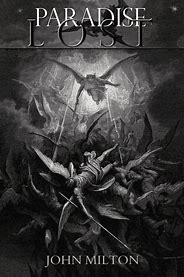
In the spaceship lounge, the Martian Dissenter is reading, this time not the Bible but Milton. I read somewhere that, in English Puritan homes, the Bible and Milton's Paradise Lost were considered the only appropriate Sunday reading. PL can be regarded as a prequel and intervel to the Bible. On the street in Birmingham, a Muslim propagandist gave me a free copy of the Koran. While I was sitting looking at this, a guy walking past told me that I should be reading the Bible because that is the proper book. When I went to practise Zen meditation in a Youth Hostel quiet room, I was joined by a Japanese man who seemed to be reading his Bible. There is a Buddhist story that the true scriptures are written on blank pages but people do not realize this so they are given something to read. In the beginning was the Word or the Deed?

Sunday, 4 November 2018

Mormons

Poul Anderson, Harvest Of Stars, 14.

I can never predict what I will find to post about when I read a page of a text by Poul Anderson. Why Mormons?

"'They're Mormons, if that rings a bell in you. The Avantists are particularly hard on their church. The claim is that its premises are antiscientific, but the truth is that its congregations object loudly to the molding of posthuman man.'" (p. 154)

"I hope my Mormon friends won't mind my saying that their church, like our country, has a grand science fiction flavor about it. That ecclesiastical division into stakes and wards is pure Heinlein, isn't it?"
-Poul Anderson, "The Discovery of the Past" IN Anderson, Past Times 182-206 AT p. 199.

Mormons are one of the many religious communities that survive in SM Stirling's Emberverse.

One of our sf writers is a Mormon.

Some people dismiss all religious street propagandists as much the same. In fact, Evangelicals, Mormons, Witnesses and Christadelphians differ considerably. I find Mormons willing to listen. They have been sent out into the world to propagate their beliefs and, in the process, they encounter alternative ideas for the first time. One asked me what was the purpose of life and seemed astonished and interested when I replied that life has no purpose; it evolved. Several Mormons have advised me to find the truth about religious matters by asking God the Father in the name of His Son, Jesus Christ, so I have done this.

Incidentally, Christadelphians originated in Birmingham, England, where there is now a Buddhist Center and a Central Mosque. There are both Christian and Muslim street preachers and propagandists. Although I have visited the Buddhist Center, it is convenient to meditate in a church in the city center.