Showing posts with label The Aeneid. Show all posts

Wednesday, 2 September 2015

Interruptions

Fourteen posts yesterday but less blog activity today. Regular readers might recognize some recurrent activities that are again imminent:

visiting the nearby city of Preston and probably meditating in a city center Catholic church because the Hindu temple is closed in the afternoon;

preparing a passage of the Aeneid for a Latin class next week;

also possibly another short foreign holiday soon;

other reading.

However, we are by no means finished rereading The Shield Of Time so there should be more about that soon. Tempora mutantur nos et mutamur in illis. (Times change and we change with them.)

Addendum: Jeeves quotes "Tempora mutantur..." in Aunts Aren't Gentlemen which I have just read.

Sunday, 17 May 2015

The Roman Tradition

The Aeneid, with which I currently struggle, is the epic of the Roman myth. As such, it explains the wars between Rome and Carthage as originating in the personal conflict between Aeneas and Dido. (Not trade rivalry but mythical founders explain everything.)

Thus, the Aeneid is variously relevant to Poul Anderson's works:

the originals of Odin and Thor escaped from Roman slavery;

the Time Patrol ensured Roman victory against Carthage, kept Germania in the Empire despite the pagan prophetess preaching the destruction of Rome and prevented a post-Roman-British-European world civilization;

the last King of Ys was a Roman centurion;

Manuel Argos based his Terran Empire on the Roman Empire.

Thus, Anderson's antecedents are considerably older than Wells, Stapledon or Heinlein.

Have I said that I detect parallels between Classical and Biblical traditions?

Homer and the poets, like Moses and the prophets, were regarded as divinely inspired authorities on theology and morality;

Greek "philo-sophia" is love of wisdom and the Hebrew Writings include Wisdom literature;

Virgil's poetry of the Augustan Age is like a pagan New Testament;

the Fourth Gospel identifies Jesus with the Word that was in the Beginning, an idea adapted from Greek philosophy, while Virgil's Aeneid has Caesar's soul in Hades waiting to be born long before the founding of Rome;

the promise to Abraham and the promise of everlasting Roman greatness are fulfilled in a single church - if you see it that way, of course! (And Anderson appropriately speculates on the future of that church.)

Saturday, 17 January 2015

Curious Beginnings

These are curious beginnings for novels:

"The story is of a lost treasure guarded by curious monsters, and of captivity in a wilderness, and of a chase through reefs and shoals that could wreck a ship. There is a beautiful girl in it, a magician, a spy or two, and the rivalry of empires. So of course - Flandry was later tempted to say - it begins with a coincidence."
-Poul Anderson, A Circus Of Hells IN Anderson, Young Flandry (New York, 2010), pp. 197-365 AT p. 197.

"Every planet in the story is cold - even Terra, though Flandry came home on a warm evening of northern summer. There the chill was in the spirit."
-Poul Anderson, A Knight Of Ghosts And Shadows IN Anderson, Sir Dominic Flandry: Last Knight Of Terra (New York, 2012), pp. 339-606 AT p. 342.

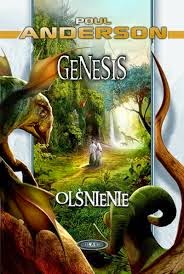
"The story is of a man, a woman, and a world. But ghosts pass through it, and gods. Time does, which is more mysterious than any of these."
-Poul Anderson, Genesis (New York, 2001), p. 3.

All three inform the reader about "the story" that he is about to read but who is the informant? The omniscient narrator of third person narrative is usually invisible, off-stage, not acknowledging that a "story" is being told but placing information inside the reader's mind without making him reflect on how that information came to be there. The reader shares the narrator's omniscience about the fictional world but without in any way thinking about him.

By contrast, the first of these three narrators is in our face with his conversational style, "...a spy or two..." He can hardly be the author, Poul Anderson, directly addressing his readers. Anderson does occasionally do this but in an introduction or foreword, not in the text. The first narrator knows what "...Flandry was later tempted to say..." so, if this narrator is not omniscient, then he must be a friend or confidante of Flandry's who is relating the latter's adventures to some third party?

The first narrator misleads us with that word "...magician..." The character in question is a mystic, occultist and hypnotist. And those "...reefs and shoals..." are a gravitational field so that the "...ship..." is a spaceship. By contrast, the second narrator acknowledges that his narrative is science fiction with his second word.

Friday, 17 October 2014

"No Boundary In Space Or Time"

Poul and Karen Anderson's character, Gratillonius, the last King of Ys, loves the Roman epic, the Aeneid, but dislikes Greek poetry because he does not understand the latter.

I suggest that Homer and the poets are the Classical parallels of Moses and the prophets while the Aeneid parallels the New Testament. The Bible is Hebrew and Greek; the Classics are Greek and Latin.

 In the Aeneid, Jupiter promises:

"'To Romans I set no boundary in space or time. I have granted them dominion, and it has no end.'"
-Virgil, The Aeneid, trans. WF Jackson Knight, (Harmondsworth, Middlesex, 1982), p. 36.

Well, it is a national epic. Mussolini might have thought that he was regaining the endless dominion. Manuel Argos bases his Terran Empire on the Roman Empire. Combining Classics and scriptures, someone else might argue that the Roman Catholic Church fulfills both the promise to Abraham and Jupiter's prophecy of endless Roman dominion?

Tuesday, 21 January 2014

Timeo Danaos

I will describe what happened today, then place it in an Andersonian context. First, because of an illness, we did not go to Preston (see previous post). Secondly, because we did not go to Preston, I was able to attend a Latin class in the afternoon and therefore spent the morning preparing for it.

After St Columba's encounter with the Loch Ness Monster and two short extracts from the Latin New Testament, we started Virgil! We even read, "...timeo Danaos et dona ferentes." (II, 49) ("I fear the Greeks, even bearing gifts.")

Virgil celebrated the Roman Empire which, in diverse timelines, is:

served by the King of Ys;
guarded by the Time Patrol;
the inspiration for the Terran Empire.

Virgil described the Greeks at Troy as "...fracti bello fatisque repulsi..." (II, 13) ("...shattered by war, rejected by the fates...") and this reflected his own experience of living through the Roman Civil Wars. It may also remind us of Poul Anderson's many descriptions of past and future wars. Virgil thanked Augustus for establishing an Imperial pax/peace. We can imagine Terrans reading Virgil while thanking Manuel Argos.