Mainwethering in the London Time Patrol office says:
"'I'd like to engage a private inquiry agent, but the only worthwhile one is entirely too clever. He operates on the principle that when one has eliminated the impossible, whatever remains, however improbable, must be the truth. And time trafficking may not be too improbable for him.'"
-Poul Anderson, Time Patrol (Riverdale, NY, 2006), pp. 21-22.
FBI agent Finch says:
"'When we've eliminated the impossible, whatever remains, however improbable, must be true.'"
-SM Stirling, Drakon (New York, 2000), p. 235.
Finch adds, "'Classical reference...'" (ibid.) when Henry looks blankly at her. Is there a detective who does not know about the Great Detective? After eliminating aliens, Finch concludes, "'Time traveler...'" (ibid.)
Later, when a time traveler informs Henry about the physical attributes of a future warrior, Henry wants to ask:
"...what about the blue tights and the cape?" (p. 243)
- thus confirming the comparison with superheroes and villains.
Showing posts with label "Time Patrol" by Poul Anderson. Show all posts
Monday, 25 January 2016
Tuesday, 13 October 2015
History, Science, Arts, Philosophies, Dialects And Mannerisms
Time Patrol Academy Training:
(i) physical and psychological instruction;
(ii) secrecy conditioning;
(iii) a new 20th century public persona;
(iv) the Temporal language;
(v) fifty thousand years of combat from Bronze Age rapiers to cyclic blasts;
(vi) "There was the study of history, science, arts and philosophies, fine details of dialect and mannerism. These last were only for the 1850-2000 period; if he had occasion to go elsewhere he would pick up special instruction from a hypnotic conditioner."
-Poul Anderson, "Time Patrol," section 2, IN Time Patrol (New York, 2006), p. 13.
(vi) implies that at least some Attached agents do move around at least within their own milieu. So someone based in 1850 could visit 2000 or vice versa? But that would be to visit a completely different era, same milieu or no same milieu. Mainwethering, working in the London office, 1890-1910, says that he was shocked to visit the 21st century. That is only the following milieu but it probably differs as much again. We are in 2015. How much has already changed since 2000?
(i) physical and psychological instruction;
(ii) secrecy conditioning;
(iii) a new 20th century public persona;
(iv) the Temporal language;
(v) fifty thousand years of combat from Bronze Age rapiers to cyclic blasts;
(vi) "There was the study of history, science, arts and philosophies, fine details of dialect and mannerism. These last were only for the 1850-2000 period; if he had occasion to go elsewhere he would pick up special instruction from a hypnotic conditioner."
-Poul Anderson, "Time Patrol," section 2, IN Time Patrol (New York, 2006), p. 13.
(vi) implies that at least some Attached agents do move around at least within their own milieu. So someone based in 1850 could visit 2000 or vice versa? But that would be to visit a completely different era, same milieu or no same milieu. Mainwethering, working in the London office, 1890-1910, says that he was shocked to visit the 21st century. That is only the following milieu but it probably differs as much again. We are in 2015. How much has already changed since 2000?
Monday, 12 October 2015
Successive Realizations
(i) Only on rereading Poul Anderson's "Time Patrol" did I realize that the Victorian private investigator and his amanuensis were Holmes and Watson although this should have been obvious in the first place.
(ii) Only on reading a Complete Sherlock Holmes over a decade later did I realize that the phrase "...the singular contents of an ancient British barrow..." was a quotation.
(iii) I did think on first reading The Shield Of Time that "Altamont" was Holmes although I had to check "His Last Bow" to confirm this.
Thus, Manse Everard of the Patrol interacts with Holmes in both volumes of the Time Patrol series, both in the omnibus collection and in the single long novel. Meanwhile, the Holmes series could appropriately be collected in three omnibus volumes. See here. Finally, it would be possible for a new reader to embark on the whole of Holmes, then to follow this with the whole Time Patrol - from the nineteenth century into the twentieth century, back to the nineteenth century, then backwards and forwards throughout history with Everard's deception of Altamont coming in the fifth of the six parts of The Shield Of Time. Quite a ride.
(ii) Only on reading a Complete Sherlock Holmes over a decade later did I realize that the phrase "...the singular contents of an ancient British barrow..." was a quotation.
(iii) I did think on first reading The Shield Of Time that "Altamont" was Holmes although I had to check "His Last Bow" to confirm this.
Thus, Manse Everard of the Patrol interacts with Holmes in both volumes of the Time Patrol series, both in the omnibus collection and in the single long novel. Meanwhile, the Holmes series could appropriately be collected in three omnibus volumes. See here. Finally, it would be possible for a new reader to embark on the whole of Holmes, then to follow this with the whole Time Patrol - from the nineteenth century into the twentieth century, back to the nineteenth century, then backwards and forwards throughout history with Everard's deception of Altamont coming in the fifth of the six parts of The Shield Of Time. Quite a ride.
Sunday, 11 October 2015
A Vast Organization
"The entire organization was so vast that he could not really appreciate the fact. He had entered something new and exciting, that was all he truly grasped with all layers of consciousness...as yet."
-Poul Anderson, "Time Patrol" section 2, IN Time Patrol (New York, 2006), p. 13.
Anderson fulfills the promise of that passage as the Time Patrol series progresses. The series opens with a conversation between Patrol recruiter, Mr Gordon, and potential recruit, Manse Everard. Of course, Everard becomes the main continuing character but this is not just a Manse Everard series.
First, whenever Everard appears, he is accompanied by a different other Patrol agent or agents. Secondly, there are several occasions when other agents interact with each other without Everard present:
Tom Nomura with Feliz a Rach;
Carl Farness with Herbert Ganz;
Carl with Kwei-fei Mendoza;
Wanda Tamberly with Tu Sequeira;
Wanda with Guion;
Wanda with Ralph Corwin;
Keith Denison with Agop Mikelian;
Keith and Agop with the director of Babylon base;
Wanda rescuing Keith.
Since these agents have different roles in the Patrol, we begin to see that the organization is indeed vaster than Everard's contribution to it even though Guion tells him:
"'You have in truth become one of the most important agents operating within the past three millennia.'"
-Poul Anderson, The Shield Of Time, Part Five, "Riddle Me This," 1990 A. D., p. 263.
Guion is from a later age and has access to Patrol records. Thus, from his perspective, Everard has not become important. It has always been known that he was/is important. As we read, we probably forget this and confusedly think of all the times guarded by the Patrol as simultaneously existing places with a shared past, present and future.
-Poul Anderson, "Time Patrol" section 2, IN Time Patrol (New York, 2006), p. 13.
Anderson fulfills the promise of that passage as the Time Patrol series progresses. The series opens with a conversation between Patrol recruiter, Mr Gordon, and potential recruit, Manse Everard. Of course, Everard becomes the main continuing character but this is not just a Manse Everard series.
First, whenever Everard appears, he is accompanied by a different other Patrol agent or agents. Secondly, there are several occasions when other agents interact with each other without Everard present:
Tom Nomura with Feliz a Rach;
Carl Farness with Herbert Ganz;
Carl with Kwei-fei Mendoza;
Wanda Tamberly with Tu Sequeira;
Wanda with Guion;
Wanda with Ralph Corwin;
Keith Denison with Agop Mikelian;
Keith and Agop with the director of Babylon base;
Wanda rescuing Keith.
Since these agents have different roles in the Patrol, we begin to see that the organization is indeed vaster than Everard's contribution to it even though Guion tells him:
"'You have in truth become one of the most important agents operating within the past three millennia.'"
-Poul Anderson, The Shield Of Time, Part Five, "Riddle Me This," 1990 A. D., p. 263.
Guion is from a later age and has access to Patrol records. Thus, from his perspective, Everard has not become important. It has always been known that he was/is important. As we read, we probably forget this and confusedly think of all the times guarded by the Patrol as simultaneously existing places with a shared past, present and future.
Wednesday, 23 September 2015
Everard's Apartment IV
How often do we see Manse Everard alone in his New York apartment? After returning from the Time Patrol Academy, he must read a dozen newspapers a day to look for indications of unauthorized time travel. What indications? He has been trained to spot them but we are not told what they are. Is unauthorized time travel that common? Or is he being given make-work until he initiates the sequence of events that will cause him to be promoted to Unattached status? He is alone and restless in his apartment when, instead of the newspapers, he reads the "...collection of Victorian and Edwardian stories..." (Time Patrol, p. 18) that does in fact generate his first job.
We learn that the apartment includes a study where a dummy computer conceals Patrol technology that seems to be voice-controlled:
"'Give me the file to present date on Specialist Wanda May Tamberly,' he ordered, adding sufficient information to identify." (The Shield Of Time, p. 177)
This passage presents nearly three pages of Everard alone in the apartment whereas usually when we see him there he is receiving a guest and, when that guest is Carl Farness, Carl narrates so that we cannot before or afterwards see Everard alone. By phone, Everard arranges to meet Wanda in San Francisco at three o'clock the following afternoon. Next day, he works till dusk in the apartment before going to city headquarters to check out a hopper and jump back in time to three o'clock in San Francisco. However, we are not told the nature of the work that kept him in his apartment into the evening.
Tuesday, 22 September 2015
Long To Reign
Charlie Whitcomb's attitude to the late nineteenth century is that of Jack Finney's time traveling character's:
"Whitcomb got a faraway look in his eyes. 'I'd like to have lived here,' he said.
"'Yeah? With their medicine and dentistry?'
"'And no bombs falling.' Whitcomb's answer held a defiance." ("Time Patrol" IN Time Patrol, p. 28)
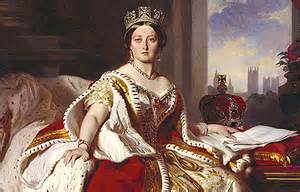
Whitcomb's fiancee was killed by a V-bomb in London in 1944. Later, however, he gets his wish. Charlie and Mary Whitcomb live in London from 1850, knowing that Victoria, having already reigned from 1837, will not die until 1901. The remainder of their lives will be spent during her reign.
I was born in 1949. Elizabeth II has reigned since 1952. Thus, I have no memory of any previous monarch. I would like to be employed by the Time Patrol to live through the 1950s in the town where I grew up, making a full sensory recording of the decade. I would see my younger self at church and would listen to the sermons and even the Latin liturgy with some understanding. To re-experience the '50s without the limitations of a child's mentality, and to know what was coming and when, while also being able to vacation in other periods without missing a moment of the 1950s! I would also want to make some changes but would not be able to get away with that in a timeline guarded by the Time Patrol.
"Whitcomb got a faraway look in his eyes. 'I'd like to have lived here,' he said.
"'Yeah? With their medicine and dentistry?'
"'And no bombs falling.' Whitcomb's answer held a defiance." ("Time Patrol" IN Time Patrol, p. 28)
Whitcomb's fiancee was killed by a V-bomb in London in 1944. Later, however, he gets his wish. Charlie and Mary Whitcomb live in London from 1850, knowing that Victoria, having already reigned from 1837, will not die until 1901. The remainder of their lives will be spent during her reign.
I was born in 1949. Elizabeth II has reigned since 1952. Thus, I have no memory of any previous monarch. I would like to be employed by the Time Patrol to live through the 1950s in the town where I grew up, making a full sensory recording of the decade. I would see my younger self at church and would listen to the sermons and even the Latin liturgy with some understanding. To re-experience the '50s without the limitations of a child's mentality, and to know what was coming and when, while also being able to vacation in other periods without missing a moment of the 1950s! I would also want to make some changes but would not be able to get away with that in a timeline guarded by the Time Patrol.
"This was the first moment..."
The first Time Patrol story, "Time Patrol," includes a vivid description of Victorian London as perceived by a time traveler, Manse Everard. The passage is quoted here.
Once again, there is a reference to the decline of Western civilization. These references, in the Time Patrol series, are dated 1858, 1894 and 1902. Each time, the reference is attributed to a Time Patrolman who knows what will happen in 1914.
There are a few other points of interest:
"The train was almost familiar, not very different from the carriages of British railways anno 1954, which gave Whitcomb occasion for sardonic remarks about inviolable traditions." (Time Patrol, p. 25)
British humor! This can raise a smile even though we do not read exactly what Whitcomb said. But it seems appropriate that time travelers should travel in a train that has not significantly changed its design from 1894 to 1954.
"In a couple of hours it let them off at a sleepy village station among carefully tended flower gardens..." (ibid.)
The station is among flower gardens but some British village railway stations are noted for their flower gardens. This kind of peaceful scene shows us part of what the Time Patrol protects, not only the superhuman Danellians in the far future but also the many periods when human beings are able to live comfortably. Dominic Flandry prolongs the Terran Empire for this reason - as well as for his own continued pleasure.
We recognize the private agent whom Everard and Whitcomb meet at the Wyndham estate:
"...he was tall, thin, hawk-faced, and accompanied by a burly, mustached fellow with a limp who seemed a kind of amanuensis." (ibid.)
Unmistakable. Well, I did not recognize them on a first reading but I was comparatively young then. Everard does not seem to recognize them even though it was one of that mustached fellow's memoirs that has brought him and Whitcomb to Victorian England.
Once again, there is a reference to the decline of Western civilization. These references, in the Time Patrol series, are dated 1858, 1894 and 1902. Each time, the reference is attributed to a Time Patrolman who knows what will happen in 1914.
There are a few other points of interest:
"The train was almost familiar, not very different from the carriages of British railways anno 1954, which gave Whitcomb occasion for sardonic remarks about inviolable traditions." (Time Patrol, p. 25)
British humor! This can raise a smile even though we do not read exactly what Whitcomb said. But it seems appropriate that time travelers should travel in a train that has not significantly changed its design from 1894 to 1954.
"In a couple of hours it let them off at a sleepy village station among carefully tended flower gardens..." (ibid.)
The station is among flower gardens but some British village railway stations are noted for their flower gardens. This kind of peaceful scene shows us part of what the Time Patrol protects, not only the superhuman Danellians in the far future but also the many periods when human beings are able to live comfortably. Dominic Flandry prolongs the Terran Empire for this reason - as well as for his own continued pleasure.
We recognize the private agent whom Everard and Whitcomb meet at the Wyndham estate:
"...he was tall, thin, hawk-faced, and accompanied by a burly, mustached fellow with a limp who seemed a kind of amanuensis." (ibid.)
Unmistakable. Well, I did not recognize them on a first reading but I was comparatively young then. Everard does not seem to recognize them even though it was one of that mustached fellow's memoirs that has brought him and Whitcomb to Victorian England.
Sunday, 20 September 2015
"One Swirl On A River"
Manson Everard graduates from the Time Patrol Academy in the Oligocene:
brief ceremony;
huge party;
arrangements for reunions;
return to the place and hour of recruitment
(for Everard, New York, 1954);
recruitment officer's congratulations;
list of contemporary agents, some in Intelligence;
return to apartment;
special consultant to Engineering Studies Co;
read newspapers for indications of time travel;
be ready to respond to a call.
"It was a peculiar feeling to read the headlines and know, more or less, what was coming next. It took the edge off, but added a sadness, for this was a tragic era." (Time Patrol, p. 17)
I first read that about 1960, six years after 1954, and am now rereading it in 2015, sixty one years after. Everard would have known what was coming next at least until 2000, the end of his "milieu." When the time was right, i.e., when The Shield Of Time was published in 1990, a Patrolman casually mentioned Gorbachev but Everard would have known that name from 1954.
On pp. 17-18 is a passage, quoted before, where Everard, looking out at a hurried New York street, reflects that "...it was all one swirl on a river..." (p. 17) from the prehuman past to the Danellian future. But, of course, as we reflected recently, the Danellians begin a mere million years hence so what happens during and even after their era? Time Patrol narratives almost imply that the Danellians occupy the End of Time whereas nothing is really the End except the much later heat death of the universe - assuming that twentieth and twenty first century scientists are right that that will happen.
"Lights flamed against a hectic sky..." (p. 17) -
- prepares the reader for almost any dramatic events to follow.
Everard finds an indication of unauthorized time travel not in a newspaper but in "...a collection of Victorian and Edwardian stories." (p. 18) It was not until sometime in the 1970s until I read that same collection and found the reference to:
"...a tragedy at Addleton and the singular contents of an ancient British barrow." (p. 18)
Of course Anderson had to have been referring to something but it had never occurred to me to wonder what.
brief ceremony;
huge party;
arrangements for reunions;
return to the place and hour of recruitment
(for Everard, New York, 1954);
recruitment officer's congratulations;
list of contemporary agents, some in Intelligence;
return to apartment;
special consultant to Engineering Studies Co;
read newspapers for indications of time travel;
be ready to respond to a call.
"It was a peculiar feeling to read the headlines and know, more or less, what was coming next. It took the edge off, but added a sadness, for this was a tragic era." (Time Patrol, p. 17)
I first read that about 1960, six years after 1954, and am now rereading it in 2015, sixty one years after. Everard would have known what was coming next at least until 2000, the end of his "milieu." When the time was right, i.e., when The Shield Of Time was published in 1990, a Patrolman casually mentioned Gorbachev but Everard would have known that name from 1954.
On pp. 17-18 is a passage, quoted before, where Everard, looking out at a hurried New York street, reflects that "...it was all one swirl on a river..." (p. 17) from the prehuman past to the Danellian future. But, of course, as we reflected recently, the Danellians begin a mere million years hence so what happens during and even after their era? Time Patrol narratives almost imply that the Danellians occupy the End of Time whereas nothing is really the End except the much later heat death of the universe - assuming that twentieth and twenty first century scientists are right that that will happen.
"Lights flamed against a hectic sky..." (p. 17) -
- prepares the reader for almost any dramatic events to follow.
Everard finds an indication of unauthorized time travel not in a newspaper but in "...a collection of Victorian and Edwardian stories." (p. 18) It was not until sometime in the 1970s until I read that same collection and found the reference to:
"...a tragedy at Addleton and the singular contents of an ancient British barrow." (p. 18)
Of course Anderson had to have been referring to something but it had never occurred to me to wonder what.
Time Criminals
The first time criminal encountered by Manse Everard is Rozher Schtein/Stane from 2987. A complete contrast to the Neldorians, Stane is a lone operator aiming at a peaceful united world, not at personal luxurious living. However, he commits murder to acquire his time machine and this makes him a criminal even if he had not then used the machine to break Time Patrol laws. The Patrol does not investigate murders except when there is a time travel connection.
In terms of criminals, The Guardians Of Time progressed from the lone foiled Stane to two initially successful Neldorians. Like Moriarty, the Neldorians achieved almost the status of continuing villains despite appearing only once! We learn that they had already given the Patrol a lot of trouble just as we realize that Moriarty must have been behind a lot of what had gone before - certainly the Red Headed League, as confirmed by two dramatizations.
However, when Poul Anderson continued the series, it did not comprise endless Patrol-Neldorian fights. The majority of the stories address other aspects of time travel paradoxes and, when the idea of a collective continuing villain was revived, the Exaltationists were much more sophisticated and ingenious than any Neldorians. In fact, when there is a threat to destroy Tyre, Everard deduces that this attempted blackmail is not the work of Neldorians:
"'This operation is too sophisticated. The enemy's got to have spent a lot of lifespan, getting to know the Phoenician milieu well and establishing that it is in fact a nexus.
"'The organizing brain must be of genius level.'" ("Ivory, And Apes, And Peacocks" IN Time Patrol, p. 259)
Thus, the time traveling equivalent of Moriarty? The Exaltationists skilfully cover their tracks, making it almost impossible to detect their preparatory work in the past, whereas the two Neldorians who helped, then killed, Hannibal seem to have taken no precautions against Patrol counter-intervention. When planning to prevent their causality violation at the Battle of Ticinus, Everard does say:
"'...we'll want to surround the battlefield unobtrusively, but I don't think we can get away with more than two agents actually on the scene. The baddies are going to be alert, you know, looking for counterinterference.'" ("Delenda Est" IN Time Patrol, p. 222)
Despite this, the Neldorians openly ride to battle with futuristic armor and weapons. When the Exaltationists, in what seemed to be a similar situation, planned to kill a leader and his son on a battlefield, one of them said:
"'If necessary, energy weapons. I hope, though, that Antiochus will dispose of his rivals in a normal way...We do not want too sorcerous a reputation.'" (The Shield Of Time, p. 89)
Another responds:
"'That would attract the Time Patrol...'" (ibid.)
In terms of criminals, The Guardians Of Time progressed from the lone foiled Stane to two initially successful Neldorians. Like Moriarty, the Neldorians achieved almost the status of continuing villains despite appearing only once! We learn that they had already given the Patrol a lot of trouble just as we realize that Moriarty must have been behind a lot of what had gone before - certainly the Red Headed League, as confirmed by two dramatizations.
However, when Poul Anderson continued the series, it did not comprise endless Patrol-Neldorian fights. The majority of the stories address other aspects of time travel paradoxes and, when the idea of a collective continuing villain was revived, the Exaltationists were much more sophisticated and ingenious than any Neldorians. In fact, when there is a threat to destroy Tyre, Everard deduces that this attempted blackmail is not the work of Neldorians:
"'This operation is too sophisticated. The enemy's got to have spent a lot of lifespan, getting to know the Phoenician milieu well and establishing that it is in fact a nexus.
"'The organizing brain must be of genius level.'" ("Ivory, And Apes, And Peacocks" IN Time Patrol, p. 259)
Thus, the time traveling equivalent of Moriarty? The Exaltationists skilfully cover their tracks, making it almost impossible to detect their preparatory work in the past, whereas the two Neldorians who helped, then killed, Hannibal seem to have taken no precautions against Patrol counter-intervention. When planning to prevent their causality violation at the Battle of Ticinus, Everard does say:
"'...we'll want to surround the battlefield unobtrusively, but I don't think we can get away with more than two agents actually on the scene. The baddies are going to be alert, you know, looking for counterinterference.'" ("Delenda Est" IN Time Patrol, p. 222)
Despite this, the Neldorians openly ride to battle with futuristic armor and weapons. When the Exaltationists, in what seemed to be a similar situation, planned to kill a leader and his son on a battlefield, one of them said:
"'If necessary, energy weapons. I hope, though, that Antiochus will dispose of his rivals in a normal way...We do not want too sorcerous a reputation.'" (The Shield Of Time, p. 89)
Another responds:
"'That would attract the Time Patrol...'" (ibid.)
Monday, 7 September 2015
Coping With A Crisis
Several Time Patrol agents respond to the crisis in "Amazement of The World," Part Six of Poul Anderson's The Shield Of Time (New York, 1991). We have met no less than four of these agents before:
Manson Everard was introduced in the opening short story, "Time Patrol," and has reappeared in every subsequent story usually, although not always, as the central character;
Keith Denson was introduced in the second short story, "Brave To Be A King," and mentioned in "Delenda Est" but has not previously reappeared;
Wanda Tamberly was introduced in "The Year Of The Ransom" and has reappeared more than once earlier in The Shield Of Time;
Guion was introduced in Part One of The Shield Of Time and reappeared in Parts Three and Five although he remains off-stage during Part Six - but he had anticipated this crisis.
"Amazement Of The World" involves four timelines:
(i) the original Time Patrol timeline;
(ii) the alpha timeline;
(iii) the beta timeline;
(iv) the restored Time Patrol timeline.
I call (i) "original" for convenience in this context. However, it incorporates many interventions by Danellians, the Patrol and time criminals so it is not the very "earliest" timeline. See here. I plan to discuss Guion's role but might run out of time now so this could be another post.
Manson Everard was introduced in the opening short story, "Time Patrol," and has reappeared in every subsequent story usually, although not always, as the central character;
Keith Denson was introduced in the second short story, "Brave To Be A King," and mentioned in "Delenda Est" but has not previously reappeared;
Wanda Tamberly was introduced in "The Year Of The Ransom" and has reappeared more than once earlier in The Shield Of Time;
Guion was introduced in Part One of The Shield Of Time and reappeared in Parts Three and Five although he remains off-stage during Part Six - but he had anticipated this crisis.
"Amazement Of The World" involves four timelines:
(i) the original Time Patrol timeline;
(ii) the alpha timeline;
(iii) the beta timeline;
(iv) the restored Time Patrol timeline.
I call (i) "original" for convenience in this context. However, it incorporates many interventions by Danellians, the Patrol and time criminals so it is not the very "earliest" timeline. See here. I plan to discuss Guion's role but might run out of time now so this could be another post.
Friday, 14 August 2015
Time Patrol Training
At the Time Patrol Academy in the Oligocene:
"The first part of instruction was physical and psychological. Everard had never realized how his own life had crippled him, in body and mind; he was only half the man he could be. It came hard, but in the end it was a joy to feel the utterly controlled power of muscles, the emotions which had grown deeper for being disciplined, the swiftness and precision of conscious thought." (Time Patrol, p. 12)
The world needs an end to divisive ideological indoctrination and the education of an entire global generation, if not by Poul Anderson's Time Patrol, then maybe by his Psychotechnic Institute: controlled muscles; disciplined emotions; swift and precise conscious thought. Exactly.
Near the end of The Shape Of Things To Come, HG Wells contrasts two street scenes: a confused and fearful crowd in the twentieth century as against the intelligent and curious individuals of the twenty second century - a better outcome than Morlocks and Eloi. Wells excelled at utopias as well as dystopias.
Anderson's Time Patrol seems just about perfect but what a pity that they have to conceal all their advantages from earlier generations.
"The first part of instruction was physical and psychological. Everard had never realized how his own life had crippled him, in body and mind; he was only half the man he could be. It came hard, but in the end it was a joy to feel the utterly controlled power of muscles, the emotions which had grown deeper for being disciplined, the swiftness and precision of conscious thought." (Time Patrol, p. 12)
The world needs an end to divisive ideological indoctrination and the education of an entire global generation, if not by Poul Anderson's Time Patrol, then maybe by his Psychotechnic Institute: controlled muscles; disciplined emotions; swift and precise conscious thought. Exactly.
Near the end of The Shape Of Things To Come, HG Wells contrasts two street scenes: a confused and fearful crowd in the twentieth century as against the intelligent and curious individuals of the twenty second century - a better outcome than Morlocks and Eloi. Wells excelled at utopias as well as dystopias.
Anderson's Time Patrol seems just about perfect but what a pity that they have to conceal all their advantages from earlier generations.
Sherlock Holmes And The Time Patrol
When Manse Everard reflects that Rudyard Kipling is still writing, he does not also mention Arthur Conan Doyle because the Time Patrol timeline has Dr John Watson instead!
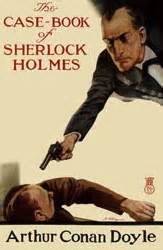
"The private agent smiled sourly and watched [two disguised Time Patrolmen] with a narrow eye as they approached the mound; he was tall, thin, hawkfaced, and accompanied by a burly, mustached fellow with a limp who seemed a kind of amanuensis." (Time Patrol, p. 25)
Poul Anderson practices the art of understatement in this passage. Manse Everard, who is our viewpoint character and one of the two Patrolmen, knows very well that the burly, mustached, limping fellow is the private agent's amanuensis. It was reading that fellow's veiled reference to this incident that has brought Everard to 1894 in the first place.
The private agent asks Everard a sharp question after noiselessly approaching from behind. Everard has several paragraphs of conversation with Holmes who must be very carefully misdirected. The local Patrol office dare not employ him because he might learn too much. And later in Everard's career, the latter must secure the Altamont case.
"The private agent smiled sourly and watched [two disguised Time Patrolmen] with a narrow eye as they approached the mound; he was tall, thin, hawkfaced, and accompanied by a burly, mustached fellow with a limp who seemed a kind of amanuensis." (Time Patrol, p. 25)
Poul Anderson practices the art of understatement in this passage. Manse Everard, who is our viewpoint character and one of the two Patrolmen, knows very well that the burly, mustached, limping fellow is the private agent's amanuensis. It was reading that fellow's veiled reference to this incident that has brought Everard to 1894 in the first place.
The private agent asks Everard a sharp question after noiselessly approaching from behind. Everard has several paragraphs of conversation with Holmes who must be very carefully misdirected. The local Patrol office dare not employ him because he might learn too much. And later in Everard's career, the latter must secure the Altamont case.
A Conversation With Stane
Manse Everard and Charlie Whitcomb of the Time Patrol meet the time criminal Stane at the bottom of p. 36 of Time Patrol (New York, 2006) and kill him half way down p. 41. Stane is simply not the main focus of the story although he does serve his purpose very well as an archetypal time traveler trying to change history. Stane's main narrative role is to put temptation in the way of Whitcomb. Given the job of driving Stane's time shuttle to Patrol HQ in the nineteenth century, Whitcomb instead succumbs to his own wish to change history by saving his fiancee from a World War II bombing raid.
Everard tells Stane:
"'We came back looking for this mysterious Stane who seemed to be one of the crucial figures of history. We suspected he might have been a time traveler, peregrinator temporis, that is. Now we know.'" (p. 38)
Since they are speaking Latin, Everard should not have to explain "peregrinator temporis." This ingenious phrase is also used in Anderson's There Will Be Time (New York, 1973) in a full Latin sentence: "Es tu peregrinator temporis?'" (p. 62)
Everard displays an almost telepathic ability to guess Stane's intentions for the future in order to put the blaster-wielding criminal off his guard so that Whitcomb can attack him from behind with an ax - one English kingdom combining "'...Saxon strength and Roman learning...'" (p. 40), guided by the time-traveling St Stanius, able to unite Europe, Earth and then the planets in peace.
What do I think of Stane's utopia? The standard Patrol retort is that, if Stane succeeds, then neither I nor anyone I have known will be born. But we were born in the previous timeline. Why should the people who would live in a (hopefully) more peaceful timeline not have a chance to be born as well? The most basic moral objection to Stane's scheme is that it starts wrong with his murder of an inter-temporal trader and the theft of his time machine.
Everard tells Stane:
"'We came back looking for this mysterious Stane who seemed to be one of the crucial figures of history. We suspected he might have been a time traveler, peregrinator temporis, that is. Now we know.'" (p. 38)
Since they are speaking Latin, Everard should not have to explain "peregrinator temporis." This ingenious phrase is also used in Anderson's There Will Be Time (New York, 1973) in a full Latin sentence: "Es tu peregrinator temporis?'" (p. 62)
Everard displays an almost telepathic ability to guess Stane's intentions for the future in order to put the blaster-wielding criminal off his guard so that Whitcomb can attack him from behind with an ax - one English kingdom combining "'...Saxon strength and Roman learning...'" (p. 40), guided by the time-traveling St Stanius, able to unite Europe, Earth and then the planets in peace.
What do I think of Stane's utopia? The standard Patrol retort is that, if Stane succeeds, then neither I nor anyone I have known will be born. But we were born in the previous timeline. Why should the people who would live in a (hopefully) more peaceful timeline not have a chance to be born as well? The most basic moral objection to Stane's scheme is that it starts wrong with his murder of an inter-temporal trader and the theft of his time machine.
The Time Patrol Organization
With admirable brevity, Poul Anderson outlines the organization of the Time Patrol, even adding that:
"Communication between years was by tiny robot shuttles or by courier, with automatic shunts to keep such messages from piling up at one instant." (Time Patrol, p. 13)
The message shuttle, vanishing with air rushing in to where it had been (p. 19), recalls the Time Traveler's model Time Machine. Everard sends a note from 1954 to Charlie Whitcomb in 1947. They were recruited from those years and returned to them after training. If Whitcomb had remained in the Patrol, would they have continued to regard themselves as seven years apart? Not necessarily. A message from Everard to another agent would be shunted or relayed to a moment in the latter's career when he was able to respond to it. But, starting his first case after graduation from the Academy, Everard wants to team up with the Whitcomb whom he knows who has also just graduated.
The modern Western milieu of the Patrol stretches from 1850 to 2000 with its headquarters in London, 1890-1910. But that is soon over. A single agent could serve in London for those twenty years and also spend time in some or all of the "...various branch offices..." (p. 13). Finishing his stint in that milieu before moving to another, he will surely know, or have access to the records of, all the Patrol business that was conducted in the Western world for that century and a half - unless there is a temporal change, which it is the Patrol's job to prevent.
"Communication between years was by tiny robot shuttles or by courier, with automatic shunts to keep such messages from piling up at one instant." (Time Patrol, p. 13)
The message shuttle, vanishing with air rushing in to where it had been (p. 19), recalls the Time Traveler's model Time Machine. Everard sends a note from 1954 to Charlie Whitcomb in 1947. They were recruited from those years and returned to them after training. If Whitcomb had remained in the Patrol, would they have continued to regard themselves as seven years apart? Not necessarily. A message from Everard to another agent would be shunted or relayed to a moment in the latter's career when he was able to respond to it. But, starting his first case after graduation from the Academy, Everard wants to team up with the Whitcomb whom he knows who has also just graduated.
The modern Western milieu of the Patrol stretches from 1850 to 2000 with its headquarters in London, 1890-1910. But that is soon over. A single agent could serve in London for those twenty years and also spend time in some or all of the "...various branch offices..." (p. 13). Finishing his stint in that milieu before moving to another, he will surely know, or have access to the records of, all the Patrol business that was conducted in the Western world for that century and a half - unless there is a temporal change, which it is the Patrol's job to prevent.
Britons
In "Time Patrol," Manse Everard and Charlie Whitcomb arrive at Addleton Barrow on a summer midnight in 464 AD.
"'Cultivated fields,' observed Whitcomb. His voice was hushed in the stillness. 'The Jutes and Saxons were mainly yeomen, you know, who came here looking for land. Imagine the Britons were pretty well cleared out of this area some years ago.'" (Time Patrol, p. 30)
Two observations here:
Cultivated fields are a far cry from the first century European wilderness that Everard will experience much later in his career. That wilderness was inhabited by these invaders of Britain.
Angles, Saxons and Jutes displaced the Britons to the South East and North West and bestowed the name "England" so how did the term "British" later come to signify the dominant culture in this island? When James VI of Scotland became James I of England, thus uniting the two kingdoms, he claimed to be restoring a lost Arthurian British unity as described in Geoffrey of Monmouth's work of historical fiction, The History Of The Kings Of Britain, which recounts the Britons' Trojan ancestry and consequent kinship with the Romans and lists not only Arthur but also Lear and Old King Cole as Kings of Britain.
Poul and Karen Anderson tackled a similar legendary history in The King Of Ys.
"'Cultivated fields,' observed Whitcomb. His voice was hushed in the stillness. 'The Jutes and Saxons were mainly yeomen, you know, who came here looking for land. Imagine the Britons were pretty well cleared out of this area some years ago.'" (Time Patrol, p. 30)
Two observations here:
Cultivated fields are a far cry from the first century European wilderness that Everard will experience much later in his career. That wilderness was inhabited by these invaders of Britain.
Angles, Saxons and Jutes displaced the Britons to the South East and North West and bestowed the name "England" so how did the term "British" later come to signify the dominant culture in this island? When James VI of Scotland became James I of England, thus uniting the two kingdoms, he claimed to be restoring a lost Arthurian British unity as described in Geoffrey of Monmouth's work of historical fiction, The History Of The Kings Of Britain, which recounts the Britons' Trojan ancestry and consequent kinship with the Romans and lists not only Arthur but also Lear and Old King Cole as Kings of Britain.
Poul and Karen Anderson tackled a similar legendary history in The King Of Ys.
The Desired Track Of History
Everard and Whitcomb's class at the Time Patrol Academy is told:
"'Sometimes the Patrol will accept damage as done and work instead to set up counteracting influences in later periods which will swing history back to the desired track.'" (Time Patrol, p. 12)
How much of that goes on? How much of the past is not how later generations think it was but only appears to have been so because, e.g., the Patrol changed the scant early records? When the Exaltationists threaten to bombard King Hiram's Tyre, the director of Jerusalem Base, "...responsible for temporal activities throughout the Hebrew lands, between the birth of David and the fall of Judah..." (p. 307), proposes not to "'...concentrate all available effort on rescuing Tyre...'" (p. 308) but to establish a reserve organization:
"'...in Jerusalem, ready to minimize the effects there. The less that Solomon's kingdom suffers, the less powerful the change vortex will be. That should give us more likelihood of damping it out altogether.'" (pp. 308-309)
Conceal from later generations that Tyre was destroyed by multiple explosions while it was trading with and influencing the Biblical Solomon? Is that possible? Chaim Zorach says that such a proposal is "'...playing fast and loose with history.'" (p. 309) He is right.
"'Sometimes the Patrol will accept damage as done and work instead to set up counteracting influences in later periods which will swing history back to the desired track.'" (Time Patrol, p. 12)
How much of that goes on? How much of the past is not how later generations think it was but only appears to have been so because, e.g., the Patrol changed the scant early records? When the Exaltationists threaten to bombard King Hiram's Tyre, the director of Jerusalem Base, "...responsible for temporal activities throughout the Hebrew lands, between the birth of David and the fall of Judah..." (p. 307), proposes not to "'...concentrate all available effort on rescuing Tyre...'" (p. 308) but to establish a reserve organization:
"'...in Jerusalem, ready to minimize the effects there. The less that Solomon's kingdom suffers, the less powerful the change vortex will be. That should give us more likelihood of damping it out altogether.'" (pp. 308-309)
Conceal from later generations that Tyre was destroyed by multiple explosions while it was trading with and influencing the Biblical Solomon? Is that possible? Chaim Zorach says that such a proposal is "'...playing fast and loose with history.'" (p. 309) He is right.
Thursday, 13 August 2015
Everywhere And Everywhen
When Mr Gordon recruits Manse Everard to the Time Patrol, he tells him that he is:
"'...going to be a kind of policeman...Everywhere. And everywhen.'" ("Time Patrol" IN Time Patrol, p. 5)
Not necessarily. Everard, undergoing basic Patrol Academy training with other recruits, is told:
"'Your work will be mostly within your own eras, unless you graduate to unattached status. You will live on the whole, ordinary lives...'" (p. 11)
- like Cynthia Denison, "'...a clerk in Engineering Studies...'" (p. 59), which is a front for the Patrol.
However, on their very first mission, Everard and fellow recruit Whitcomb, function like Unattached agents, going, just the two of them on a single time hopper, to apprehend an armed time criminal in 464 AD with the approval of Mainwethering in the Patrol London office. Clearly, Gordon and Mainwethering know something that Everard does not, yet.
At the end of this introductory story, yet another Patrolman tells Everard:
"'You'll want more training, of course. Your type of personality goes best with Unattached status - any age, any place, wherever and whenever you may be needed.'" (p. 53)
- which was exactly what Gordon let slip in the first place. But a procedure had to be followed. Everard had to receive basic training, then be put to the test on an active mission, then promoted to Unattached after further training. After that, his status remains unchanged for the remainder of the series - except that he gains seniority even among the Unattached because he is responsible for restoring their timeline.
"'...going to be a kind of policeman...Everywhere. And everywhen.'" ("Time Patrol" IN Time Patrol, p. 5)
Not necessarily. Everard, undergoing basic Patrol Academy training with other recruits, is told:
"'Your work will be mostly within your own eras, unless you graduate to unattached status. You will live on the whole, ordinary lives...'" (p. 11)
- like Cynthia Denison, "'...a clerk in Engineering Studies...'" (p. 59), which is a front for the Patrol.
However, on their very first mission, Everard and fellow recruit Whitcomb, function like Unattached agents, going, just the two of them on a single time hopper, to apprehend an armed time criminal in 464 AD with the approval of Mainwethering in the Patrol London office. Clearly, Gordon and Mainwethering know something that Everard does not, yet.
At the end of this introductory story, yet another Patrolman tells Everard:
"'You'll want more training, of course. Your type of personality goes best with Unattached status - any age, any place, wherever and whenever you may be needed.'" (p. 53)
- which was exactly what Gordon let slip in the first place. But a procedure had to be followed. Everard had to receive basic training, then be put to the test on an active mission, then promoted to Unattached after further training. After that, his status remains unchanged for the remainder of the series - except that he gains seniority even among the Unattached because he is responsible for restoring their timeline.
"Time Patrol"
We know that "Time Patrol" is about time travel, and indeed about a time traveling organization, because of its title and because we first read it either in The Magazine Of Fantasy And Science Fiction or in a collection called Guardians Of Time. Nevertheless, when reading or rereading the story, we should disregard this foreknowledge in order to appreciate how the author introduces his theme. In Time Patrol (New York, 2006), "Time Patrol" begins on p. 1 but the explanation, "'Our real business is patrolling time...'" appears near the end of p. 5.
The first intimation is the description of Mr Gordon on pp. 1-2. He bears a "...foreignness...'" (p. 1) that was more than the sum of his incongruous facial features. "It was hard to place." (p. 2) - because it was in his entire manner which, for his job as a recruitment officer, there is no need to disguise. If the past is a foreign country, then the future must be even more so.
When Everard undergoes tests, the machines are unrecognizable and the letters and numerals on meter faces are unfamiliar. They do not look like "...anything belonging to A.D. 1945. Perhaps he was already beginning to realize the truth, even then." (p. 4) We later learn that the time settings on Patrol timecycles use post-Arabic numerals. Further, the white-skinned hairless assistant could be from Saturnian orbit in the thirty second century (The Shield Of Time, Part Six, 18,244 B.C., I, p. 296).
It is good to reread this extremely sophisticated opening story in the light of the subsequent series.
The first intimation is the description of Mr Gordon on pp. 1-2. He bears a "...foreignness...'" (p. 1) that was more than the sum of his incongruous facial features. "It was hard to place." (p. 2) - because it was in his entire manner which, for his job as a recruitment officer, there is no need to disguise. If the past is a foreign country, then the future must be even more so.
When Everard undergoes tests, the machines are unrecognizable and the letters and numerals on meter faces are unfamiliar. They do not look like "...anything belonging to A.D. 1945. Perhaps he was already beginning to realize the truth, even then." (p. 4) We later learn that the time settings on Patrol timecycles use post-Arabic numerals. Further, the white-skinned hairless assistant could be from Saturnian orbit in the thirty second century (The Shield Of Time, Part Six, 18,244 B.C., I, p. 296).
It is good to reread this extremely sophisticated opening story in the light of the subsequent series.
Subscribe to:
Posts (Atom)