Tuesday, 20 August 2024

Late Evening Coincidence

OK. I am reading "Fantasy in the Age of Science...," in which Poul Anderson devotes a paragraph to the uniqueness of Lord Dunsany and also rereading Mike Carey's Lucifer: The Divine Comedy (New York, 2003) in which two fallen cherubim approaching a massive house in a supernatural realm remark that it:

"...looks kind of faux Victorian...like something out of Lord Dunsany." (p. 169)

Coincidence.

Also, I found a cover image for Time And The Gods by Dunsany and have thought that Anderson's "The Sorrow of Odin the Goth" and "Star of the Sea" could appropriately be collected under a new title as The Gods Of Time.

And now I propose to return to mere reading for what is left of this evening.

Borderline Cases

"Fantasy in the Age of Science."

In "Wireless" by Rudyard Kipling, an experimental radio set seems to initiate a rapport between a contemporary man and John Keats. I have not read this story but, from Poul Anderson's description of it, I accept his classification of it as borderline fantasy-sf. 

When I was a philosophy student, a lecturer in Aesthetics suggested a definition of the form: "Art is (fill in the blank)." I cannot remember how he filled in the blank but what I do remember is that another student immediately responded with "What would you say about the borderline case where...?" The lecturer quite reasonably replied, "Why should I say anything about it? It is a borderline case." 

I could not possibly agree more. Definitions are not water-tight compartments. A borderline case is not a counterexample. That should be printed on T-shirts and distributed free to philosophy students. Also, when someone suggests: "All A is (fill in the blank)," our first response should be to understand what he is saying and why he is saying it, not to think of counterexamples. That can come later.

I agree with Anderson that sf accepts the scientific worldview whereas fantasy does not.

Language

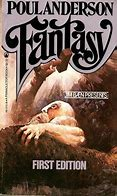
Poul Anderson, "Fantasy in the Age of Science" IN Anderson, Fantasy (New York 1981), pp. 265-286.

In this article, Poul Anderson speculates that the earliest language was not signals between animals but stories symbolizing the mysteries of life. I think that language is more likely to have begun with signals.

When I was a philosophy student, we studied a set of unpublished notes which argued that when we tell someone something, we:

try to cause the other person to believe something;

try to cause him to believe it by causing him to know that we want him to believe it;

think that it is unlikely that he would come to believe it if he did not know that we were trying to cause him to believe it.

I think that a possible origin of language is as follows. Proto-human hunters, cooperating with each other, are stalking their prey from different directions. One individual, noticing that one of his companions is in turn being stalked by a predator, mimics a scream of fear or pain. His intention is neither to enact fear or pain, as in a dramatic performance, nor to pretend that he himself is in fear or pain but to warn his companion who, having heard that mock scream, will look around him, will see that he is in danger and will then understand that the sound had been intended as a warning to him. Thus a re-useable word meaning "Beware!" or "Danger!" has been coined. Practical communication is likely to have preceded symbolic narration.

Yggdrasil And The World's Moods


The Norse mythological World Ash Tree, Yggdrasil:

is a metaphor in Poul Anderson's Technic History/Dominic Flandry novel, A Stone In Heaven;

exists literally in Anderson's myth-retelling heroic fantasy novel, War Of The Gods;

exists in one of the many parallel universes in Anderson's Operation Luna.

We can handle any of these options but can we conceptualize a single universe that somehow incorporates every mythology? In Neil Gaiman's The Sandman, when Lucifer Morningstar retires as Lord of Hell, he expels the demons and damned, locks the now empty Hell behind him and gives the key to Morpheus, Lord of the Dreaming. Various pantheons petition Morpheus to give them Hell, including Odin who hopes to survive the Ragnarok by sheltering in Hell! In Lucifer, Mike Carey's sequel to The Sandman, Lucifer visits Loki bound under the Earth. We read:

Lucifer: "There is a cavern at the heart of the world..."
Mazikeen: "Is there?"
Lucifer: "Sometimes. It depends what mood the world is in."
-Mike Carey, Lucifer: Inferno (New York, New York, 2004), p. 134, panel 2, captions 1-3.

Well, that explains everything. Cosmology changes with the world's moods.

All of these works are connected in the collective imagination.

Science And Magic

"Sargasso of Lost Starships."

The spaceship is haunted not by ghosts but by teleporting aliens with telekinetic powers. There is a Star Trek episode where some extra-galactics pose as Hallowe'en items. In Poul Anderson's "Interloper," extra-solar aliens secretly controlling Earth (the ultimate conspiracy theory) and sporadically glimpsed by human beings, have generated myths about demons. However, these malevolent beings are opposed by a clandestine nocturnal Terrestrial species, also sporadically glimpsed, led by King Oberon. The magic in Poul Anderson's Operation Chaos is given a scientific explanation in his Operation Luna. Thus, the apparently supernatural can be rationalized scientifically. A less frequent narrative option is sf-fantasy overlap:

scientifically powered superheroes meet magically powered superheroes, but "superheroes" is a hybrid genre;

Poul Anderson's multiverse incorporates scientific and magical universes but there is no direct contact between them;

decades ago, in an American comic book, supernatural forces defended Earth against alien invaders and the British sf comic strip hero, Jet-Ace Logan, learned that superstitious practices like hanging up garlic against vampires worked.

A Long Way

Years ago, the BBC showed all four of Wagner's Ring operas with sub-titles so I followed the story and was able to summarize it to someone else afterwards although I cannot remember the details now. A guy commentating on it remarked, "What a long way we have come..." He meant from the Rhine maidens to the Gotterdamerung and it was a long way. This is part of the background of Poul Anderson's "The Sorrow of Odin the Goth" which also comes a long way, through four generations of a Gothic family, yet is just one instalment of Anderson's history-spanning Time Patrol series.

Another long way is taken by Anderson's History of Technic Civilization, from the exploration of the Saturnian system in the twenty first century to the exploration of the Cloud Universe cluster in another spiral arm of the galaxy several millennia in the future. Technic civilization has risen, fallen and been replaced between these two end-points. I reread the Technic History - and Stieg Larsson's Millennium Trilogy - the way some people reread The Lord Of The Rings.

Monday, 19 August 2024

Humanoid Forms And A Mysterious Volume Of Space

"Sargasso of Lost Starships."

This must be the only story by Poul Anderson in which the aliens are not just generally humanoid in form but completely indistinguishable from human beings as in an average Star Trek episode. We take this to be impossible as stated later in the Technic History:

"Unless, to be sure, happenstance had duplicated most of those details for you in the course of evolution...
"Ridiculous, Laure thought. Coincidence isn't that energetic."
-Poul Anderson, "Starfog" IN Anderson, Flandry's Legacy (Riverdale, NY, June 2012), pp. 709-794 AT p. 725.

This is clear evidence that "Sargasso..." should be regarded as a fiction within the fiction. 

Allowing for some cosmetic changes, as to colour and length of hair, one and the same actor would be able to play three of Poul Anderson's villains:

Brann in The Corridors Of Time;
Merau Varagan in the Time Patrol series;
Morzach in "Sargasso..."

- two time travellers and one teleporter-telekineticist. Screen audiences would be free to speculate about one being manifesting in three timelines.

The title of "Sargasso..." had led me to expect a hard sf story about abandoned spaceships orbiting together at somewhere like a Lagrangian point which, if I remember correctly, was how Dan Dare was reunited with his old ship, Anastasia.

The Black Nebula is a region of strange phenomena which turn out to be neither supernatural nor technological but psychic in nature. I have been told that, in Babylon 5, which I have never watched, human space travellers avoid a volume of space where an incomprehensibly advanced civilization operates. Presumably something like this is possible: a species as far advanced beyond humanity as we are beyond cave-dwellers.

Alien Forms

"Sargasso of Lost Starships." 

"The natives of Donarr have the not uncommon centauroid form..." (p. 372)

If centauroids are not uncommon, then why are so many of the intelligent species that we see in the Technic History bipedal? It is easier to write about bipeds. I usually forget the descriptions of bodily features because they are not permanently in front of us as they would be in a visual medium and the aliens are usually essentially humanoid in any case. There are quadrupeds in Poul Anderson's Fire Time and After Doomsday as well as in his Technic History.

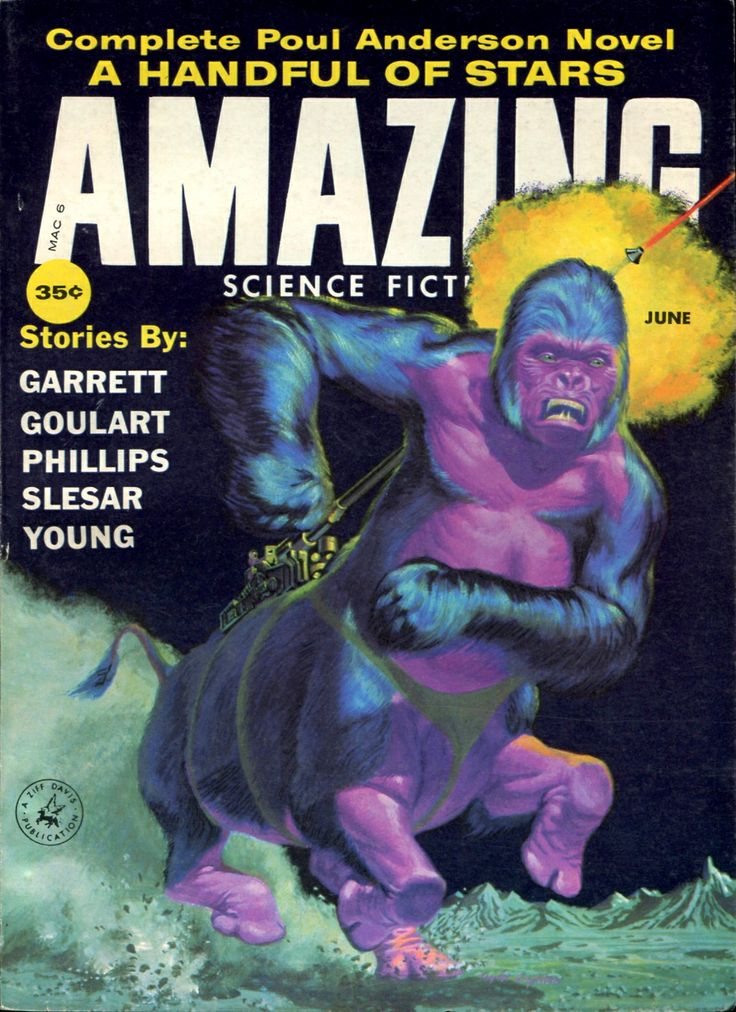
Try to imagine an alien body that is not just an amalgamation of parts of Terrestrial animals. The description of the Donarrian refers to a rhinoceros, a gorilla, an ape, canine tusks and a mouth. See also "Aliens in Anderson and Niven," here.

A Donarrian serves under Flandry and there is a Donarrian settlement on Daedalus.

Slavery In The Terran Empire

"[Donovan] doubted if he'd committed an enslaving offense."

Later in the Technic History:

"...we're reviving [slavery] in the Empire, Rochefort thought."
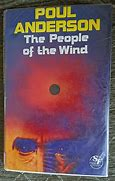
-Poul Anderson, The People Of The Wind IN Anderson, Rise Of The Terran Empire (Riverdale, NY, March 2011), pp. 437-662 AT IV, p. 487.

Explanations for this apparent discrepancy:

there was slavery on Ansa so Donovan mistakenly thought that it also existed in the Empire;

the author of "Sargasso..." lived after The People Of The Wind and anachronostically projected slavery back into that earlier period;

slavery existed in the early Empire, then was phased out or terminated, then was revived;

slavery existed at different times and places within the Empire and no one knows the full story.

Captain Donovan, Earl Basil

Poul Anderson, "Sargasso of Lost Starships" IN Anderson, Rise Of The Terran Empire (Riverdale, NY, March 2011), pp. 363-436.

Basil Donovan wears two tarnished insignia, stars for a captain and silver leaves for an Ansan earl. The blue-skinned, rhinoceros-bodied, gorilla-armed, ape-faced, tusked Donarrian, Wocha, has been Donovan's slave all their lives and was his batman during the recently concluded space war against Terra. Ansa has been defeated and occupied. After becoming very drunk in the Golden Planet among the bombed buildings of Lanstead, Donovan leads the singing of an Ansan rebel song, starts an anti-Terran bar fight and is arrested. Sam Olman, a peasant still loyal to the now dis-ennobled Donovans, is bayonetted in the fight.

I like to think that, even if "Sargasso..." is a fiction within the fiction, its author researched Ansan history and chose a real Earl Basil as his hero. Thus, we can imagine that that historically real former earl and space captain did get drunk and start a fight even if we do not swallow the main narrative in which he accompanies a Terran expedition to the mysterious Black Nebula.