Bryan Talbot says that Alice "...pervades our culture." (p. 132)
Poul Anderson wrote a Dominic Flandry story called "The White King's War";
Alan Moore's Miracleman, Book Two, is called The Red King Syndrome;
John le Carre wrote The Looking Glass War;
James Blish's John Amalfi thinks, "Curiouser and curiouser." (Cities In Flight, p. 251);
Talbot says that there is an Alice influence on Heinlein. (?)
In "The White King's War," incorporated into A Circus Of Hells, Flandry refers to a "'...rockinghorsefly...'" and a "'...bread-and-butterfly...'" (Young Flandry, CHAPTER EIGHT, p. 249) and almost says, "'Ahoy, ahoy, check.'" (CHAPTER NINE, p. 251)
Talbot summarizes every invasion of England but skips over Harald Hardrada's failed attempt at conquest. However, Anderson gives us this in his The Last Viking Trilogy.
Wednesday, 20 June 2018
Tuesday, 19 June 2018
This Evening And Tomorrow
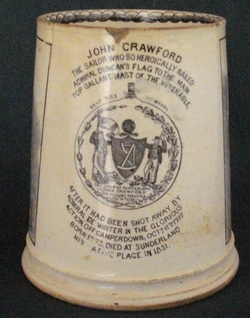
(From Alice In Sunderland.)
Blogging till midnight and beyond was disrupting my sleep pattern so I now stop about 09:00 pm, which means a longer gap till the breakfast posts, if any.
After about 09:00 pm, I sometimes want a visual break from reading prose and prefer graphic works to TV. Alan Moore's graphic fiction, Miracleman, led to a comparison of Poul Anderson's obscure flying men with several more famous ones here whereas Bryan Talbot's graphic documentary, Alice In Sunderland, led to a comparison of Anderson's Dominic Flandry with the historical Jack Crawford.
I expect to continue rereading Talbot this evening. Either this or other inputs will probably lead to more posts here tomorrow.
Blogging till midnight and beyond was disrupting my sleep pattern so I now stop about 09:00 pm, which means a longer gap till the breakfast posts, if any.
After about 09:00 pm, I sometimes want a visual break from reading prose and prefer graphic works to TV. Alan Moore's graphic fiction, Miracleman, led to a comparison of Poul Anderson's obscure flying men with several more famous ones here whereas Bryan Talbot's graphic documentary, Alice In Sunderland, led to a comparison of Anderson's Dominic Flandry with the historical Jack Crawford.
I expect to continue rereading Talbot this evening. Either this or other inputs will probably lead to more posts here tomorrow.
Five Naval Heroes Or A Man And His Rep III
See:
A Man And His Rep
A Man And His Rep II
Brands
Five naval heroes are:
Horatio Nelson
Horatio Hornblower
Jack Crawford
John Paul Jones (and here)
Dominic Flandry
Other sf naval series characters have been mentioned in the combox.
We mix historical and fictional figures because history, legend and fiction mix. While reading about fictional heroes, we should never forget that they have real life counterparts.
We mix sea and space because of a literary tradition that sees the latter as an extension of the former, e.g., see A Later Period, although it is arguable that this is implausible.
Dominic Flandry is a space naval hero whose exploits change future history, e.g., even his opening adventure on Starkad saves the Terran fleet and thus also Terra itself. For this reason, I compare Flandry with a real historical hero:
"Crawford's actions shape future history and give the expression 'to nail your colours to the mast' to the English language."
-Bryan Talbot, Alice In Sunderland (London, 2007), p. 42.
Crawford's life has some superb interactions between the living legend and the real man:
because he refused to play the hero, a stand-in replaced him at his official parade of honour;
he refused a lucrative offer to play himself in re-enactments of the Battle of Camperdown;
he criticized the pottery bearing images of his heroic deed;
but, like Hornblower, he did attend Nelson's funeral - and walked in the procession.
Invoking Virgil, we might imagine that the soul destined to be born as Flandry was also present. (Aeneas, ancestor of Romulus, met Caesar in Hades just as the Fourth Gospel projected Christ as the Word back to the Beginning.)
Whitehaven, the town where I lived for my first two or three years, is proud of its association with John Paul Jones because he attacked it! Time changes perspectives:
"'If an Englishman of around 1600 had found out about the American Revolution, he probably would have thought it a tragedy; an Englishman of 1950 would have had a very different view of it. We're in the same spot. The messages we get from the really far future have no contexts yet.'"
-James Blish, The Quincunx Of Time (New York, 1983), AN EPILOGUE, pp. 109-110.
We are indeed in the same spot. In Poul Anderson's History of Technic Civilization, Americans must accept that the Terran Empire will have its Admiralty Center in the Rockies and Englishmen must accept that Britain will have become a mere Mayoralty.
The Pardon and Freedom were arranged by Gerard Richardson MBE as part of the launch of the series of Maritime Festival. Richardson's of Whitehaven is now the honorary Consulate to the US Navy for the Town and Port of Whitehaven. The Consul is Rear Admiral (retired) US Navy, Steve Morgan and the Deputy Consul is Rob Romano.[35]
-copied from here.
A Man And His Rep
A Man And His Rep II
Brands
Five naval heroes are:
Horatio Nelson
Horatio Hornblower
Jack Crawford
John Paul Jones (and here)
Dominic Flandry
Other sf naval series characters have been mentioned in the combox.
We mix historical and fictional figures because history, legend and fiction mix. While reading about fictional heroes, we should never forget that they have real life counterparts.
We mix sea and space because of a literary tradition that sees the latter as an extension of the former, e.g., see A Later Period, although it is arguable that this is implausible.
Dominic Flandry is a space naval hero whose exploits change future history, e.g., even his opening adventure on Starkad saves the Terran fleet and thus also Terra itself. For this reason, I compare Flandry with a real historical hero:
"Crawford's actions shape future history and give the expression 'to nail your colours to the mast' to the English language."
-Bryan Talbot, Alice In Sunderland (London, 2007), p. 42.
Crawford's life has some superb interactions between the living legend and the real man:
because he refused to play the hero, a stand-in replaced him at his official parade of honour;
he refused a lucrative offer to play himself in re-enactments of the Battle of Camperdown;
he criticized the pottery bearing images of his heroic deed;
but, like Hornblower, he did attend Nelson's funeral - and walked in the procession.
Invoking Virgil, we might imagine that the soul destined to be born as Flandry was also present. (Aeneas, ancestor of Romulus, met Caesar in Hades just as the Fourth Gospel projected Christ as the Word back to the Beginning.)
Whitehaven, the town where I lived for my first two or three years, is proud of its association with John Paul Jones because he attacked it! Time changes perspectives:
"'If an Englishman of around 1600 had found out about the American Revolution, he probably would have thought it a tragedy; an Englishman of 1950 would have had a very different view of it. We're in the same spot. The messages we get from the really far future have no contexts yet.'"
-James Blish, The Quincunx Of Time (New York, 1983), AN EPILOGUE, pp. 109-110.
We are indeed in the same spot. In Poul Anderson's History of Technic Civilization, Americans must accept that the Terran Empire will have its Admiralty Center in the Rockies and Englishmen must accept that Britain will have become a mere Mayoralty.
Pardon by the town and port of Whitehaven in 1999
John Paul Jones was given an honorary pardon in 1999 by the Port of Whitehaven for his raid on the town, in the presence of Lt. Steve Lyons representing the US Naval Attaché to the UK, and Yuri Fokine the Russian Ambassador to the UK. The US Navy were also awarded the Freedom of the Port of Whitehaven, the only time the honour has been granted in its 400-year history.[34]The Pardon and Freedom were arranged by Gerard Richardson MBE as part of the launch of the series of Maritime Festival. Richardson's of Whitehaven is now the honorary Consulate to the US Navy for the Town and Port of Whitehaven. The Consul is Rear Admiral (retired) US Navy, Steve Morgan and the Deputy Consul is Rob Romano.[35]
-copied from here.
Five Time Travel Scenarios
I have said all this before but let's summarize it again.
Wells' Time Traveler seated on his Time Machine fast forwards, then rewinds, the rest of the universe.
Poul Anderson's Time Patrolmen seated on their timecycles disappear from one set of spatiotemporal coordinates and appear at another.
Anderson's mutant time travelers, not needing time machines, fast forward, then rewind, the rest of the universe.
In Anderson's "Flight to Forever," passengers enclosed in the time projector see not fast forwarded or rewound events but featureless grayness through its port hole.
Anderson's Wardens and Rangers walk or drive along long corridors that have been rotated onto the temporal axis.
There is a discernible Wellsian heritage in each of these four very different Anderson scenarios. In these five examples of fictional time travel, only the Wardens and Rangers literally move along the fourth dimension and their motion in that direction takes time in another dimension.
Wells' Time Traveler seated on his Time Machine fast forwards, then rewinds, the rest of the universe.
Poul Anderson's Time Patrolmen seated on their timecycles disappear from one set of spatiotemporal coordinates and appear at another.
Anderson's mutant time travelers, not needing time machines, fast forward, then rewind, the rest of the universe.
In Anderson's "Flight to Forever," passengers enclosed in the time projector see not fast forwarded or rewound events but featureless grayness through its port hole.
Anderson's Wardens and Rangers walk or drive along long corridors that have been rotated onto the temporal axis.
There is a discernible Wellsian heritage in each of these four very different Anderson scenarios. In these five examples of fictional time travel, only the Wardens and Rangers literally move along the fourth dimension and their motion in that direction takes time in another dimension.
Two Time Wars
Which Poul Anderson novel am I describing?
Two time travel groups wage war through time;
they cannot change known events;
therefore, what they contend to influence is their common future;
however, they can change the longer term significance or ultimate outcomes of particular events.
It is possible to summarize two very different novels and make them sound much the same. This can be done, e.g., with CS Lewis' Perelandra and James Blish's A Case Of Conscience. The other side of the coin is that authors can be given the same idea and do different things with it. A Case Of Conscience is one of three stories by different authors set on the planet Lithia.
Several of Poul Anderson's works are alternative developments of Wells' ideas of Time as the Fourth Dimension and of ways to "move" along it. Maybe more on this later.
Two time travel groups wage war through time;
they cannot change known events;
therefore, what they contend to influence is their common future;
however, they can change the longer term significance or ultimate outcomes of particular events.
It is possible to summarize two very different novels and make them sound much the same. This can be done, e.g., with CS Lewis' Perelandra and James Blish's A Case Of Conscience. The other side of the coin is that authors can be given the same idea and do different things with it. A Case Of Conscience is one of three stories by different authors set on the planet Lithia.
Several of Poul Anderson's works are alternative developments of Wells' ideas of Time as the Fourth Dimension and of ways to "move" along it. Maybe more on this later.
Many Parts
Dominic Flandry should be played by two actors because he changes his face between installments.
Ythrians, Merseians and other aliens should be represented by Computer Generated Imaging and should not sound human just as Narnian Talking Beasts should sound like talking beavers, wolves, lions etc. Nothing is more incongruous than a human voice emerging from a giant owl.
Maybe the more space operatic installments of Poul Anderson's Technic History could be animated? "Honorable Enemies" with its large green Merseians, small blue Betelgeuseans and tall golden Chereionite hunting flying dragons on individual flyers above jagged mountains under a red giant sun reads like a cartoon. "The Star Plunderer" could begin with explorers performed by actors finding a manuscript in the ruins of Sol City, then segue into a cartoon of human beings fighting four-armed Gorzunians - suggesting that maybe it did not really happen like that.
In SM Stirling's Shadowspawn series, actors would get to swap characters because metamorphosing Shadowspawn impersonate each other and because the memories of a dead human woman are projected into the comatose body of a Shadowspawn woman killed in her aetheric form.
Ythrians, Merseians and other aliens should be represented by Computer Generated Imaging and should not sound human just as Narnian Talking Beasts should sound like talking beavers, wolves, lions etc. Nothing is more incongruous than a human voice emerging from a giant owl.
Maybe the more space operatic installments of Poul Anderson's Technic History could be animated? "Honorable Enemies" with its large green Merseians, small blue Betelgeuseans and tall golden Chereionite hunting flying dragons on individual flyers above jagged mountains under a red giant sun reads like a cartoon. "The Star Plunderer" could begin with explorers performed by actors finding a manuscript in the ruins of Sol City, then segue into a cartoon of human beings fighting four-armed Gorzunians - suggesting that maybe it did not really happen like that.
In SM Stirling's Shadowspawn series, actors would get to swap characters because metamorphosing Shadowspawn impersonate each other and because the memories of a dead human woman are projected into the comatose body of a Shadowspawn woman killed in her aetheric form.
Monday, 18 June 2018
Some Strange Alternative Earths
(Tbilisi, Georgia.)
"...Georgians burst spontaneously into choral song in places like elevators, rather like inhabiting an operetta."
-SM Stirling, Shadows Of Falling Night (New York, 2014), CHAPTER TWENTY-ONE, p. 414.
I have imagined some strange alternative Earths:
(i) Earth Opera where everyone in the street spontaneously dances and sings when something important happens between two or three people in their midst;
(ii) Earth Advertisement where no one can use a product without literally singing its praises;
(iii) Earth Cartoon where everyone looks cartoonish and the laws of physics are as in animated films;
(iv) Earth Anthropomorphism inhabited by bipedal cats, dogs etc wearing clothes, speaking English, driving cars etc.
There are probably more. A challenge for sf writers: write a story set in one of these universes and make it make sense. Poul Anderson's and Gordon R. Dickson's Hoka might be a start in this direction.
"...Georgians burst spontaneously into choral song in places like elevators, rather like inhabiting an operetta."
-SM Stirling, Shadows Of Falling Night (New York, 2014), CHAPTER TWENTY-ONE, p. 414.
I have imagined some strange alternative Earths:
(i) Earth Opera where everyone in the street spontaneously dances and sings when something important happens between two or three people in their midst;
(ii) Earth Advertisement where no one can use a product without literally singing its praises;
(iii) Earth Cartoon where everyone looks cartoonish and the laws of physics are as in animated films;
(iv) Earth Anthropomorphism inhabited by bipedal cats, dogs etc wearing clothes, speaking English, driving cars etc.
There are probably more. A challenge for sf writers: write a story set in one of these universes and make it make sense. Poul Anderson's and Gordon R. Dickson's Hoka might be a start in this direction.
From Judges To Psychotechnicians
How far we range in imagination. A recent post referred to:
the Biblical Book of Judges;
Greek myth;
a modern novel;
modern comic strips;
an alternative present envisaged by Alan Moore;
a remote future envisaged by Poul Anderson.
In the twentieth century, the emphasis switched from strong men to flying men. Superheroes started in science fiction and their origins are still visible there:
Anderson's Un-Men, Sensitive Man, self-propelled psychotechnicians and mutant time travelers;
Larry Niven's Gil the Arm and protectors;
Julian May's Jack the Bodiless and Diamond Mask;
SM Stirling's Adrian Breze resisting the Shadowspawn with their own powers of telepathy, metamorphosis etc.
the Biblical Book of Judges;
Greek myth;
a modern novel;
modern comic strips;
an alternative present envisaged by Alan Moore;
a remote future envisaged by Poul Anderson.
In the twentieth century, the emphasis switched from strong men to flying men. Superheroes started in science fiction and their origins are still visible there:
Anderson's Un-Men, Sensitive Man, self-propelled psychotechnicians and mutant time travelers;
Larry Niven's Gil the Arm and protectors;
Julian May's Jack the Bodiless and Diamond Mask;
SM Stirling's Adrian Breze resisting the Shadowspawn with their own powers of telepathy, metamorphosis etc.
Giant Squids And Evil Men
SM Stirling's characters also fight a giant squid. See here.
In Robert Heinlein's The Puppet Masters, Poul Anderson's A Knight Of Ghosts And Shadows and SM Stirling's Shadowspawn Trilogy, some human beings willingly serve the enemies of mankind. Our species is capable of that.
A Dream Of Flying
Superman was conceived as a superior strongman like Samson and Hercules and began with striking similarities to Hugo Danner, the title character of Philip Wylie's Gladiator.
Although Superman's most distinctive features are:
the colorful caped costume with the "S" shield on the chest;
strength;
speed;
flight -
- when he began, he was just strong, fast and thick-skinned. Other powers, even flight, were added later. Thus:
Without Flight
Samson
Hercules
Hugo Danner
the earliest Superman
Able To Fly
later versions of Superman
Captain Marvel
Mick Anglo's Marvelman
Alan Moore's Marvelman/Miracleman
The three "Marvel" characters are direct successors of Superman. Alan Moore's Miracleman, Book One, is A Dream Of Flying. Micky Moran has grown up, is married, lives in Margaret Thatcher's Britain, dreams of flying thanks to a magic word, remembers his word, transforms, remembers having been Mick Anglo's character, learns that that was a falsehood and changes the world.
Poul Anderson has human beings flying under their own power in "The Chapter Ends." See the image attached to Chronological Questions II, also the concluding paragraph of that post.
(This post was meant to go on Comics Appreciation with a link from Poul Anderson Appreciation but it has wound up here.)
Although Superman's most distinctive features are:
the colorful caped costume with the "S" shield on the chest;
strength;
speed;
flight -
- when he began, he was just strong, fast and thick-skinned. Other powers, even flight, were added later. Thus:
Without Flight
Samson
Hercules
Hugo Danner
the earliest Superman
Able To Fly
later versions of Superman
Captain Marvel
Mick Anglo's Marvelman
Alan Moore's Marvelman/Miracleman
The three "Marvel" characters are direct successors of Superman. Alan Moore's Miracleman, Book One, is A Dream Of Flying. Micky Moran has grown up, is married, lives in Margaret Thatcher's Britain, dreams of flying thanks to a magic word, remembers his word, transforms, remembers having been Mick Anglo's character, learns that that was a falsehood and changes the world.
Poul Anderson has human beings flying under their own power in "The Chapter Ends." See the image attached to Chronological Questions II, also the concluding paragraph of that post.
(This post was meant to go on Comics Appreciation with a link from Poul Anderson Appreciation but it has wound up here.)
Subscribe to:
Posts (Atom)