(I) Vance Hall, commenting on the Philosophy of Noah Arkwright, points out that four discoveries:
Tuesday, 6 January 2026
Noah Arkwright
Thursday, 16 January 2025
Many Informants
Monday, 13 January 2025
Introductions III
(II) Minamoto describes how space industries saved Earth, a necessary condition for the emergence of Technic civilization.
(III) Hloch is interested in Technic civilization insofar as it impacts on Ythrians and has led to the founding of his choth on Avalon.
(IV) Hloch tries to explain Terran nations and the Solar Commonwealth as a nation of nations to his fellow Ythrians.
(V) Vance Halls makes progress from uranium fusion and lasers to artificial gravity and the quantum hyperjump seem perfectly reasonable.
(VI) Noah Arkwright explains that there are so many sophont species that many of them can partially communicate with human beings.
(VII) Arkwright doubts whether Technic civilization has entered a neo-Elizabethan age except for some analogies.
(VIII) Le Matelot compares:
his generation to Europeans in America or to Greeks in the Mediterranean;
the Polesotechnic League to medieval mercantile guilds.-
- but also differentiates Technic from Classical or Western civilization.
The two remaining passages require further elucidation.
Introductions II
In "The Saturn Game":
(I), (II) the first two of four passages signed by Francis L. Minamoto, dated 2057.
In The Earth Book Of Stormgate:
(III) the editor, Hloch's, general introduction;
(IV) his introduction to the second story, "The Problem of Pain."
In The Trouble Twisters:
(V) an extract from Vance Hall, Commentaries on the Philosophy of Noah Arkwright, used to introduce "The Three-Cornered Wheel";
(VI) an extract from Noah Arkwright, An Introduction to Sophontology, used to introduce "A Sun Invisible";
(VII) a recording of Noah Arkwright included in the diary of Urwain the Wide-Faring and used to introduce "The Trouble Twisters."
In Trader To The Stars:
(VIII) Le Matelot;
(IX) an extract from "Margin of Profit" used to introduce "Territory";
(X) a verse by Shelley used to introduce "The Master Key."
We will say something about each of these passages.
Tuesday, 11 June 2024
More Galactography II
Monday, 1 January 2024
Multi-Layered Narratives
In The Van Rijn Method:
Francis L. Minamoto introduces "The Saturn Game";
Hloch introduces seven stories that had previously been collected in The Earth Book of Stormgate;
Vance Hall and Noah Arkwright, respectively, introduce two stories that had previously been collected in The Trouble Twisters;
Le Matelot introduces one story that had previously been collected in Trader To The Stars.
Hloch informs us about the fictional authors of the Earth Book works. Thus, a daughter of the hero of "Esau" wrote both "Esau" and "The Season of Forgiveness" and both these stories had been published in the Avalonian periodical, Morgana, before Hloch collected them in the Earth Book. The main action of "Esau" is framed by a conversation between its hero and Nicholas van Rijn. Thus, throughout The Van Rijn Method, we experience multiple layers of narrative and historiography. In the case of "Esau":
Saturday, 4 November 2023
More Beginnings Than You Can Shake A Stick At (Assuming That's Your Idea Of A Good Time, Of Course)
"The Three-Cornered Wheel," (1963) introduced by an excerpt from Vance Hall's Commentaries on the Philosophy of Noah Arkwright, is the beginning of David Falkayn's career in the Polesotechnic League.
"The Trouble Twisters," (1965) introduced by an excerpt from the diary of Urwain the Wide-Faring,is the beginning of van Rijn's first trade pioneer crew, led by Fallayn.
"Day of Burning," (1967) introduced by Hloch, is the beginning of anti-Terran sentiment on Merseia.
Mirkheim is the beginning of the end of the Polesotechnic League!
"How To Be Ethnic In One Easy Lesson," (1974) introduced by Hloch, is the beginning of James Ching's career in the League and "Esau," (1970) also introduced by Hloch, is the beginning of Emil Dalmady's career as a van Rijn-sponsored entrepreneur. Neither of these stories initiates a series but, in both cases, Hloch imparts some subsequent information.
"Wingless," (1973) and "Rescue on Avalon," (1973), both introduced by Hoch, are the beginnings of two successive stages of human-Ythrian colonization of Avalon.
"A Tragedy of Errors," (1968), introduced by an unsigned italicized passage, is the beginning of some important interstellar alliances during the Long Night.
"Starfog," (1967) is the beginning of a period of immense wealth in the civilization of the Commonalty.
Monday, 23 October 2023
All The Narrative Layers
"The Three-Cornered Wheel," introduced by an extract from Commentaries on the Philosophy of Noah Arkwright by Vance Hall;
"A Sun Invisible," introduced by an extract from An Introduction to Sophontology by Noah Arkwright;
"The Season of Forgiveness," introduced by Hloch who explains that this story was written by Judith Dalmady/Lundgren, was based on a story relayed to her by her father and was published in Morgana.
In terms of content:
"The Three-Cornered Wheel" introduces David Falkayn, working as an apprentice on the planet Ivanhoe;
"A Sun Invisible" shows Falkayn working for van Rijn's company although not yet in personal contact with van Rijn;
"The Season of Forgiveness" recounts later events on Ivanhoe.
The Arkwrightian "introductions" (really independent essays) to the first two Falkayn stories had been added in the collection, The Trouble Twisters, just as Hlochian introductions were added in the Earth Book.
Thus, there were three stages of publication:
original publication of stories or serialized novels in sf magazines, notably Analog;
collection of shorter works in Trader To The Stars, The Trouble Twisters and the Earth Book as well as in the two Flandry collections and also book publication of novels;
finally, the complete Saga.
Sunday, 10 September 2023
Inter-Species Humour
Noah Arkwright's introduction to "A Sun Invisible" says that human beings are the butt of bawdy jokes elsewhere in the galaxy. (I think that Noah Arkwright says this. I do not have the relevant volume to hand.)
Monday, 14 August 2023
Millions And Billions Of Aliens
Will extra-solar intelligences be too psychologically and culturally alien for communication and mutual comprehension? Noah Arkwright informs us that billions are but millions are not. Human beings interact with the millions, not with the billions. This reads like a rationalization by an sf author who wants to write about aliens that look different but speak and think the same. However, in various works, Poul Anderson gives us human-like and some very unhuman-like aliens. The psychology of the Ythrians is derived from their biology as intelligent flying carnivores. The Technic History also includes the tripartite Didonians. In Anderson's single-volume future history, Genesis, organic life is rare but post-organic intelligences traverse interstellar distances. If you dislike one of Anderson's set of fictional premises, then read another!
Sunday, 13 August 2023
Mankind In The Galaxy
Satan's World, IV.
We might compile a collection of wise sayings from the Technic History, starting with:
"[Falkayn's] partners...were too experienced to believe the old cliche that all humans look alike." (p. 368)
That is how human beings would look to many intelligent species in Technic civilization: all alike.
Thursday, 4 May 2023
Introductions
The Technic Civilization Saga, Volumes I-III, inherited not only Hloch's twelve introductions and one afterword from The Earth Book of Stormgate but also six introductions from the other two earlier collections:
Tuesday, 27 December 2022
Future Historical Sources
Wednesday, 2 February 2022
Again On Introductions
In Anderson's Technic History:
Sunday, 23 January 2022
Three Stages In A Future History
The Trouble Twisters, The Earth Book Of Stormgate and The Technic Civilization Saga are three stages of pulling the Technic History together into a unity.
In The Trouble Twisters, what had been three different stories about David Falkayn are presented as Parts I-III. References to Master Beljagor, who had appeared in Part II, and to Martin Schuster, who had appeared in Part I, are written into Part III on the assumption that the reader has just read those Parts. Introductions, fictitiously written by Vance Hall, Noah Arkwright and Urwain the Wide-Faring, are added, thus expanding our perspective on Technic civilization.
In the Earth Book, collecting twelve works, introductions by Hloch are added, thus increasing our information about Technic civilization and, more specifically, about conditions on Avalon after the Terran War.
The Technic Civilization Saga, in seven volumes, presents all forty-three Technic History installments in chronological order of fictitious events, preserves the fictional introductions and even adds one more fictional introduction composed by its Compiler, Hank Davis.
Thursday, 20 January 2022
Earth-Like Planets As Common As Eggs?
THE TROUBLE TWISTERS: Its Place In The Technic History
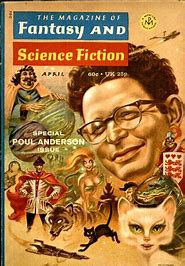
The cover of my copy of The Trouble Twisters (New York, 1977) (see image) proclaims that this is "The second book in the future history of the Polesotechnic League." Let us imagine that, before The Trouble Twisters, we have read only the three Nicholas van Rijn stories collected as Trader To The Stars, beginning with "Hiding Place." (There are in fact ten Technic History installments set earlier than "Hiding Place" but, for many of us, our starting point with this series was Trader To The Stars.)
The Trouble Twisters contains a total of six items.
(i) A NOTE OF LEITMOTIF, pp. 7-8.
This note serves as a general introduction to any volume set in the Technic History because it outlines both the relevant technological advances and the perennial human limitations. It is signed:
"-Vance Hall, Commentaries on the Philosophy of Noah Arkwright" (p. 8)
Who Noah Arkwright might be is not explained.
(ii) Part I THE THREE-CORNERED WHEEL, pp. 9-54.
This is the first of the three David Falkayn stories collected in this volume. They are presented not as separate items but as "Parts" of a single work recounting Falkayn's early career. In Part I, teen-aged Falkayn is apprenticed to Martin Schuster and there is no mention of Nicholas van Rijn.
(iii) NOTES TOWARD A DEFINITION OF RELATEDNESS, pp. 55-56.
These notes come more as an interlude between stories than as an introduction to the following story. However, the notes discuss the extent to which some extra-solar environments are humanly habitable and some intelligent species are mutually comprehensible and these observations are relevant to Falkayn's adventures in (iv). The notes are signed:
"-Noah Arkwright, An Intorduction to Sophontology" (p. 56)
(iv) Part II A SUN INVISIBLE, pp. 57-93.
In this second David Falkayn story, Falkayn is a Polesotechnic League factor, working for van Rijn's Solar Spice & Liquors Company. His role on Ivanhoe in (ii) has hastened his certification as a journeyman. Now he wants early Master Merchant certification and to be noticed by "...old Nick van Rijn." (p. 60)
(v) PLUS CA CHANGE, PLUS C'EST LA MEME CHOSE, pp. 95-97.
This account of an encounter with Noah Arkwright is:
"-Recorded in the diary of Urwain the Wide-Faring" (p. 97)
There is no discernible connection between Noah Arkwright and David Falkayn. I no longer think that (i), (iii) and (v), which were added in The Trouble Twisters, serve as introductions to (ii), (iv) and (vi), respectively. They are simply additional texts, adding more background to the Technic History.
(vi) Part III THE TROUBLE TWISTERS, pp. 99-190.
Falkayn is working in a team with Adzel and Chee Lan. Has he gone independent? No. A flash-back on pp. 110-112 recounts the interview in which van Rijn, still employing Falkayn, appointed him to lead the first ever trade pioneer crew. At last, van Rijn makes a brief but decisive appearance in this second Polesotechnic League volume.
After The Trouble Twisters, there are three novels, three short stories, The Earth Book Of Stormgate and the nine-volume Flandry period followed by its single-volume sequel.
Wednesday, 19 January 2022
"The Trouble Twisters": Some Structural Considerations
According to the table of contents, this story occupies pp. 77-208. Thus, in this edition, it is 132 pages in length. My personal arbitrary rule of thumb for a novel is 100 + pages. In my copy of The Trouble Twisters (New York, 1977), the story occupies pp. 95-190 with one blank page between the introduction (see below) and the text and thus is 94 pages in length. Clearly, novel length is a matter of word count, not of page count.
Despite what the contents page says, a reader of David Falkayn: Star Trader finds on pp. 77-80 a peculiar short story for want of a better description or perhaps more accurately just a story summary with the heading, "PLUS CHANGE PLUS C'EST LA MEME CHOSE," while the narrative text commencing on p. 81 is headed "THE TROUBLE TWISTERS." Thus, the reader cannot tell, as far as I can see, that pp. 77-80 are meant to be understood as an introduction to the story. That pp. 77-80 do count as an introduction is affirmed by the Compiler, Hank Davis, in his general introduction to the volume. Further, each of the three stories in The Trouble Twisters has such an idiosyncratic "introduction" and the other two are explicitly headed "INTRODUCTION" when they appear in the preceding volume of The Technic Civilization Saga.
"Plus ca change plus c'est la meme chose" is French for "The more it changes, the more it is the same thing." This title seems as unrelated to the "introduction" as the "introduction" is to the introduced text. However, this let's-agree-to-call-it-an-introduction-for-the-time-being can be welcomed as an extra short Technic History installment imparting information about Noah Arkwright, the unnamed first person narrator and his unfortunate auditor, Urwain the Wide-Faring. Hloch's Earth Book introductions enhance the Technic History and so do these off-the-wall Trouble Twisters introductions.
"The Trouble Twisters" is divided into numbered sections or short chapters, I-XI, so maybe, after a lunch of homemade vegetable soup, cheese sandwiches and coffee, I will reread I.
Sunday, 2 January 2022
Three Kinds Of Introductions
(i) The author, directly addressing his readers, discusses the text. Such an introduction is clearly not part of the work in question and may be added in later editions. Thus, in The Technic Civilization Saga, Poul Anderson introduces The Game Of Empire and The Night Face and his original foreword to "Lodestar" is re-presented as an afterword.
(ii) The opening passage of the text is a fictional introduction. Thus, Donvar Ayeghen fictitiously introduces Anderson's "The Star Plunderer."
(iii) Newly written fictional introductions precede the texts in later collections, e.g., in Anderson's The Trouble Twisters and The Earth Book Of Stormgate. Thus, we read introductions fictitiously written by:
Vance Hall, an extract from his Commentaries on the Philosophy of Noah Arkwright;
Noah Arkwright, an extract from his An Introduction to Sophontology;
Urwain the Wide-Faring, an extract from his diary;
Hloch of Stormgate Choth.
And all this is faithfully reproduced in The Technic Civilization Saga.
Monday, 27 September 2021
The Saga, Volume II
"Territory," about van Rijn, has the most historically authoritative introduction possible because it is no less than a passage about the Polesotechnic League quoted from the first van Rijn story, "Margin of Profit." That story, requiring revision before it could be collected in a Technic History volume, was not included in Trader To The Stars but was nevertheless quoted at the beginning of "Territory." In David Falkayn: Star Trader, this two-page passage is headed "A HISTORICAL REFLECTION."
"The Trouble Twisters," about the trade pioneer crew led by Falkayn, is "introduced" by Urwain the Wide-Faring's account of his encounter with Noah Arkwright. This is simply a separate story. "The Master Key," about van Rin, is preceded by a verse from Shelley and Satan's World, about van Rijn, Falkayn and the trader team, has no introduction.