Sunday, 22 October 2023

Some Technic History Summarized

The Game of Empire, CHAPTER TWENTY-ONE.

Reigns
Georgios: ineffectual; Crown Prince Josip's favourites gain power.
Josip: atrocities wring wealth from outlying planets.
Hans: reformist and austere.
Dietrich and Gerhart: continuations of their father, Hans.
Karl: still to come.

Thus, a general picture emerges from several instalments and is summarized here.

A Possible Future (Prevented)
Emperor Olaf reforms, cleanses, strengthens, keeps his promises, calls for a genuine peace, bargains honestly, makes Merseian-instructed appointments to the Policy Board and High Command, arbitrates forcefully and incorruptibly and dies old and honoured. 

His heir, openly served by Merseian advisors and by intellectuals extolling Merseian ideals, accepts Merseian help to enforce distasteful edicts. 

His grandsons and their contemporaries are:

"...the first generation of the new humanity." (p. 441)

Insidious.

Future History Models

A British Wellsian-Stapledonian future history is a single-volume historical text book whereas an American Heinleinian future history is a series of fictional narratives set in successive historical periods. Stapledon's account of the Martian invasions is as objective and impersonal as an English historian's account of the Norman conquest - thus contrasting sharply with a conventional novel set during that period. But such histories would be written if there really were Martian invasions. (Wells wrote both The War of the Worlds and The Shape of Things to Come.)

When an American future historian introduces a volume or summarizes a period, his text momentarily approaches the British model. See Heinlein's Time Chart or Blish's Cities in Flight Introductions. In The Game of Empire, CHAPTER TWENTY-ONE, Poul Anderson summarizes events during the reigns of five Terran Emperors:

Georgios
Josip
Hans
Dietrich
Gerhart

For the Merseians, this period begins with Brechdan Ironrede as Protector of the Roidhun's Grand Council and Aycharaych as Head of Intelligence and ends with Tachwyr as Protector. Apart from the thwarting of their Magnusson usurpation scheme, the Merseians are forced to reorganize a lot, thus disrupting their operations. This is bound to compound their demoralization which is expressed by Tachwyr.

Targovi Is Canny

The Game of Empire, CHAPTER NINETEEN.

Approaching the Zacharian defence installation flat on the ground like the Tigery hunter that he is, Targovi feels a faint shudder. Because the spaceport is directly opposite on the far side of the Mencius range, he deduces a connecting tunnel. Unidentified craft have been seen to land at the spaceport which, like the installation, is closed to visitors. Anyone or anything could have come to Zacharia and could now be inside that installation. He will soon learn that Merseians are.

"...Targovi conjectured, security was lax. The Zacharians would have had no cause to be strict, not for centuries, and if requirements had changed overnight, organization and training could hardly have done the same." (p. 407)

Very good thinking. Here is Flandry's Legacy. Diana Crowfeather succeeds Dominic Flandry as his adventurous daughter. Targovi, son of Flandry's Starkadian friend, Dragoika, succeeds him as an Agent of the Terran Empire. 


Friday, 20 October 2023

Falkayn And Magnusson

If fictional history is to be authentic, then it must present characters who sometimes express diametrically opposed perceptions and interpretations of a single set of events. Thus, David Falkayn on Polesotechnic League aid to Merseia:

"'We want to save you, because you are sentient beings. But it'll be expensive, and a lot of the work will have to be done by outfits like mine, which exist to make a profit. So, besides a scientific base, we want a reasonable economic return.
"'Eventually, though, we'll depart. What you do then is your own affair. But you'll still have your civilization. You'll also have a great deal of new equipment and new knowledge. I think you're getting a bargain.'"
-Poul Anderson, "Day of Burning" IN Anderson, David Falkayn: Star Trader (Riverdale, NY, March 2010), pp. 209-272 AT p. 221.

Centuries later, Olaf Magnusson on the same issue:

"'...the Terran rescue mission upset [the Merseian's] whole order of things and found ways to get rich off their tragedy-...'"
-The Game of Empire, CHAPTER EIGHTEEN, p. 397.

Thus, according to Magnusson, the Terrans provoked hostility and aggression from the Merseians! Maybe they should not have helped?

Magnusson also informs Flandry that:

"'...the Starkad incident caused relations to deteriorate entirely.'"
-ibid., p. 398.

Flandry and consecutive readers of Anderson's Technic History know what the Merseians attempted at Starkad - more than enough to cause a deterioration in relations. But we need more of this in future histories - not that I am keeping up with any current series, however.

The Game Of Empire, Contents Of Chapters, Continued


The Game of Empire
, CHAPTERS

THIRTEEN Targovi with Rihu An in Lulach
FOURTEEN Targovi persuades Pele, then meets Diana
FIFTEEN Targovi persuades Diana
SIXTEEN  Targovi spies on Pele and Kukulkan
SEVENTEEN The team arrives on Zacharia
EIGHTEEN Magnusson and Flandry on Sphinx
NINETEEN Targovi gets proof of Zacharian-Merseian collusion
TWENTY They escape from Zacharia
TWENTY-ONE Magnusson's background
TWENTY-TWO Aftermath on Daedalus and Merseia
TWENTY-THREE Flandry with Diana etc on Imhotep

And that is the end of the Flandry period of Poul Anderson's Technic History, unfortunately.

The Game Of Empire, Contents Of Chapters

The Game of Empire, CHAPTERS

ONE Diana meets Axor in Olga's Landing on Imhotep
TWO Targovi investigates on Daedalus
THREE Targovi recruits Diana and Axor at sea on Imhotep
FOUR Olaf and Vida Magnusson at home on Daedalus
FIVE Targovi etc travel to and arrive on Daedalus
SIX Tachwyr and the Grand Council on Merseia
SEVEN Diana with General Gatto in Aurea
EIGHT Interstellar war and Helen Kittredge
NINE Diana and Axor embark on Waterblossom
TEN On the Highroad River
ELEVEN The Merseian attack on Gorrazan
TWELVE Dominic and Miriam Flandry at home in Archopolis on Terra

Eleven more chapters... Maybe later.

Narrative Action

The Game of Empire.

We want the narrative to linger in some of the exotic locations imagined by Poul Anderson but the action has to move fast if it is to reach its resolution by the end of a not-too-lengthy novel. In CHAPTER SEVENTEEN, Targovi's group arrives on the island of Zacharia. At the end of this chapter, Kukulkan Zachary is urging Diana to pass on her genes... (That is not where the action is going to be, though.)

CHAPTER EIGHTEEN is an "interlude," if we can use that word without disrespect towards overtly more important characters, about Olaf Magnusson and Dominic Flandry meeting on the planet Sphinx. CHAPTER NINETEEN, returning to the main narrative thread on Zacharia, begins:

"The climax was violent." (p. 402)

Thus, events on Zacharia have proceeded directly from arrival to climax. After all the violence, Targovi, Diana and Axor will flee from the island, taking with them the military intelligence that they had come to gather, at the end of CHAPTER TWENTY. In a while, I will do a breakdown of how many chapters are devoted to each setting: Imhotep, Zacharia etc. Terra and Sphinx get one chapter each.

Tomorrow, like last Saturday, will hopefully involve a long day trip, this one longer, to London, setting of at 6:30 AM as against 8:00 AM. Please do not be surprised if there are no posts.

Two Highly Relevant Quotations

"We have the right, and the obligation, to tell old stories in new ways, because they are our stories."
-NEIL GAIMAN
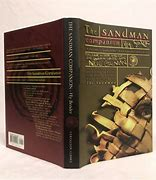
-quoted IN Hy Bender, The Sandman Companion (London, 2000), introduction, pp. xi-xiv AT p. xiv.

"The most beautiful thing we can experience is the mysterious. It is the source of all true art and science."
-ALBERT EINSTEIN
-quoted in ibid., 1, p. 2.

Theses two quotations epitomize Poul Anderson. Old stories are retold in new ways in:

The King of Ys (with Karen Anderson)
Hrolf Kraki's Saga
War of the Gods
The Merman's Children

The mysterious inspires scientific cosmology and Anderson's novelistic art in:

Tau Zero
Starfarers
Genesis
etc

The old and the mysterious meet when Hugh Valland retells a story of Thor in World Without Stars. Characters from mythical and scientific backgrounds meet in the Old Phoenix. Poul Anderson strongly parallels Neil Gaiman in several ways but also is more cosmic and comprehensive than him.

Prejudice In Four Future Timelines

The Game of Empire, CHAPTER SEVENTEEN.

"'The collapse of the Polesotechnic League removed the last barrier against intolerance -'" (p. 382)

That was intolerance against the genetically "perfect" Zacharians. But we did not read about Zacharians while we were reading about the League. Poul Anderson retconned them later. Zacharian-League stories set earlier could have been added later but, as we know, Anderson was withdrawing from the Technic History when he wrote The Game of Empire.

The equivalent group in Robert Heinlein's Future History is the Howard Families, bred for longevity and suffering persecution after going public. The Howards appear only in Volume IV, Methuselah's Children, but we are to understand that they had existed from the late nineteenth century and thus were present in the background throughout Volumes I-III. With the single exception of Andy Libby in "Misfit," Heinlein missed the chance to show that some of the characters in earlier stories had been Howards under their "Masquerade" names.

In James Blish's The Seedling Stars, there is prejudice against "Adapted Men," genetically modified to live on Ganymede and extrasolar planets. However, the Adapted Men cannot live on Earth so that there is little occasion for direct conflict. In James Blish's and Norman L. Knight's A Torrent of Faces, there is prejudice against genetically modified human amphibians.

Thursday, 19 October 2023

Vishnu, Heimdal, Kwan Yin And Isis

The Game of Empire, CHAPTER SEVENTEEN.

When Targovi's group arrives on Zacharia, the greeting committee comprises Vishnu, Heimdal, Kwan Yin and Isis Zachary. These names all have some significance for me personally. 

Vishnu is the most comprehensive Hindu deity:

he is the preserver in the Trimurti of creator, preserver, destroyer;

his incarnations are evolutionary stages - fish, tortoise, boar, man-lion, dwarf and five human;

his human incarnations include Lord Krishna, the Buddha and one in the future!

Heimdal is an important deity in Norse mythology.

Kanzeon (Kwan Yin) is one of the images in our meditation hall, both in the local group and at the monastery.

Isis is an important goddess in Egyptian mythology. 

What's not to like?